


I seem to like this boat more every time I take it out. The ReactR is a highly capable design that strikes a great balance: stable when things get pushy, but also playful and nimble for finding joy in every eddy turn.
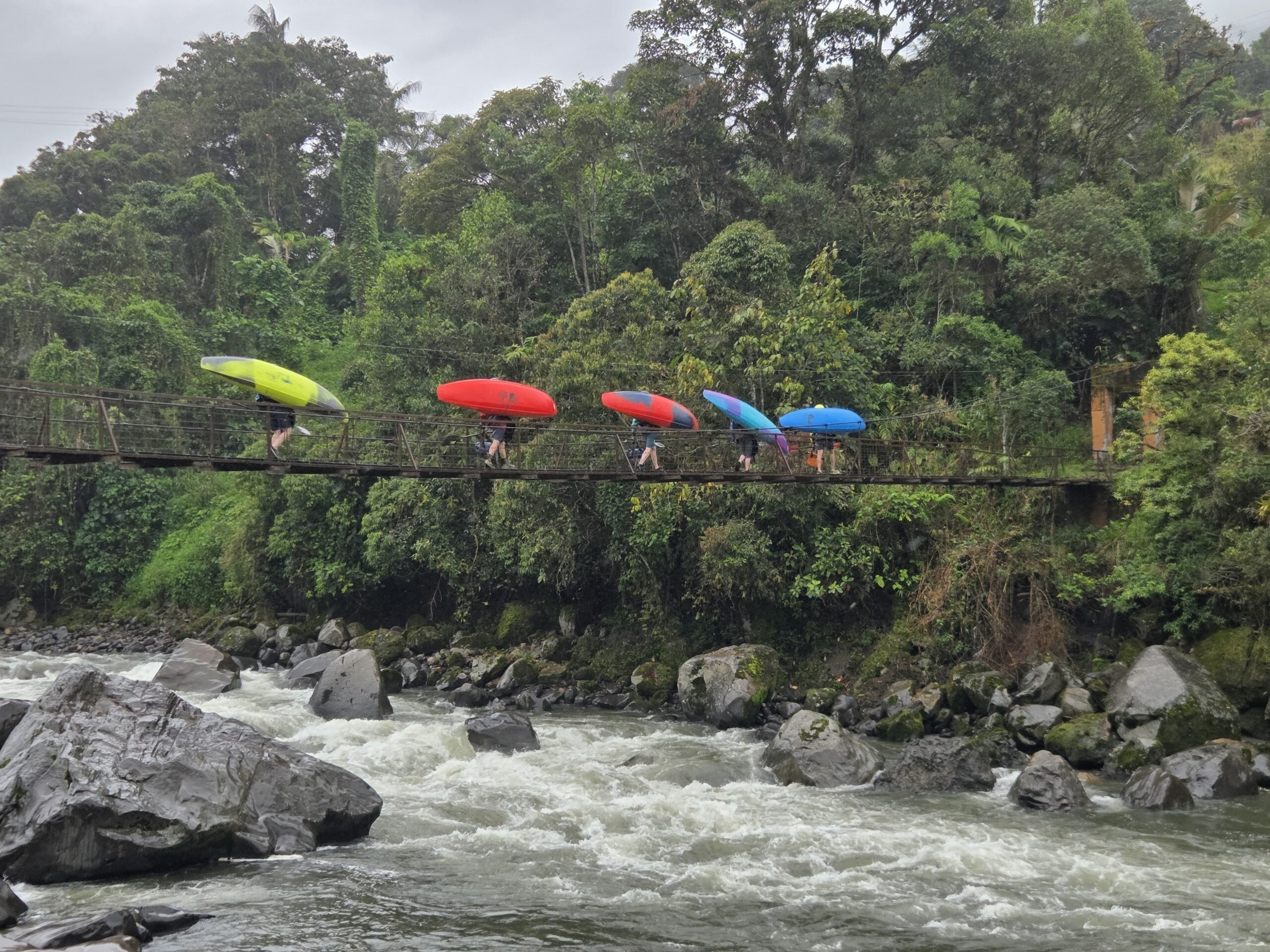
Earlier this year, I was invited on a friend’s birthday trip to Ecuador. A location I had heard a bit about, but had never been high on my list to visit. My wife, Holly and I picked up Ali and Cara and headed to Manchester Airport. After successfully checking in our 3 ReactRs and 1 Scorch, we were on our way to Ecuador to meet Maeve and Alec.
We first headed to a small town called Baeza, where, during the months December to February, you can find a small microcosm of kayakers who have travelled from all around the world to paddle Ecuador’s rivers. Baeza is situated at the confluence of two large rivers, the Rio Quijos and the Rio Cossanga, both of which have multiple sections of varying grades and styles of whitewater. Baeza is a perfect hub for kayakers, and there are several kayaker-accommodating places to stay as well. For our time in Baeza, we stayed at Hotel La Casa de Rodrigo and were warmly hosted by the main man himself, Rodrigo.
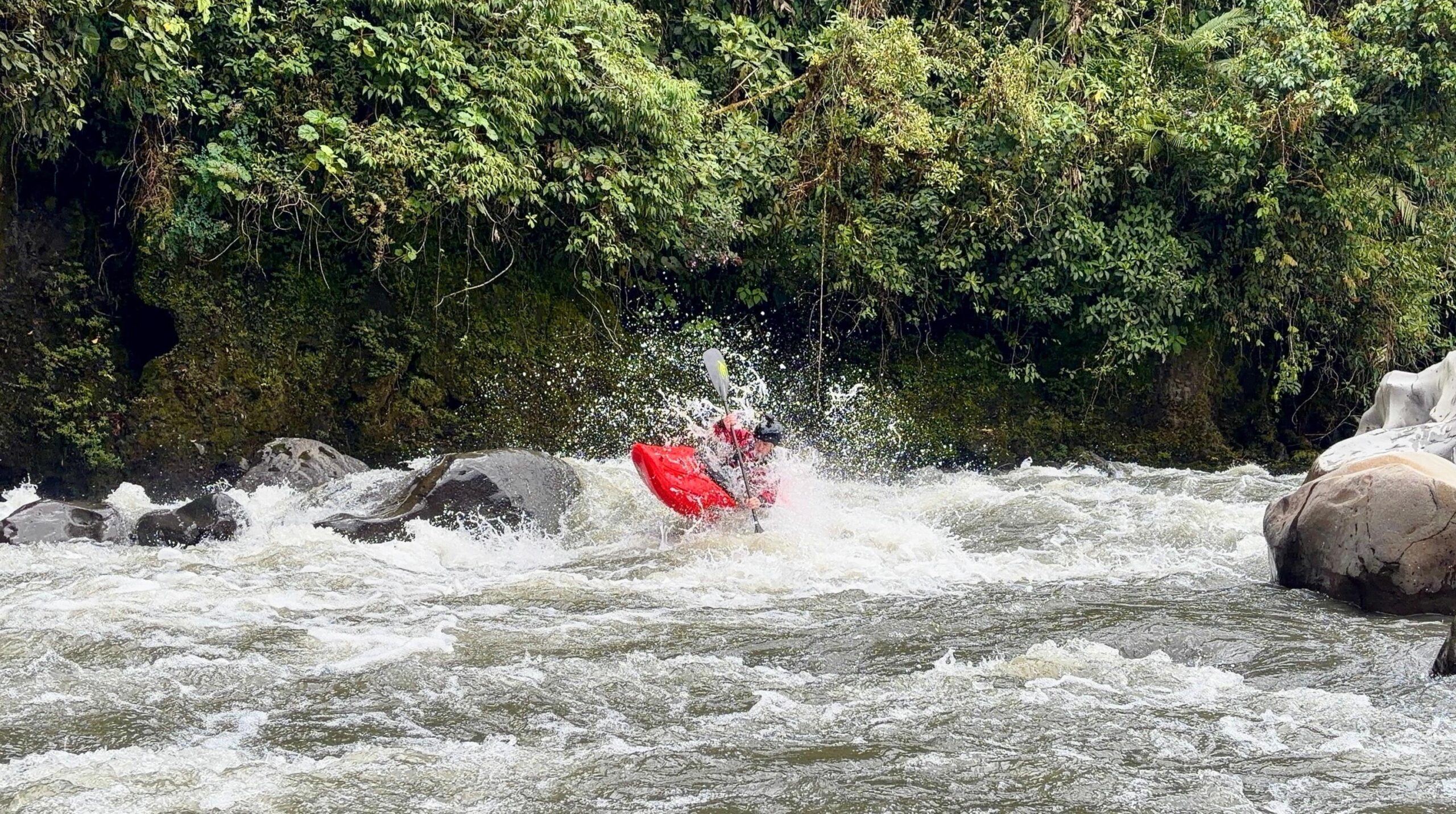
Coming from the UK, I am very familiar with low-volume, steep creeking, and having been to the Zambezi a few times and spent some time in Indonesia, I’ve had my fair share of big-volume, too. Ecuador certainly has both of these styles, but it also has a lot of what I like to call “medium-volume” paddling, which is something vaguely in between these extremes. Where the river is around 20-40 metres wide, littered with boulders sub-surface, creating whitewater features or standing proud of the surface for us to navigate around.
On day 1, we got straight on the Quijos, Bridge 3 to Sardinas, a section which gave us a great warm-up and taste of the medium-volume style. Immediately, I appreciated being in the ReactR. Whilst the whitewater wasn’t particularly challenging on this section, effortlessly navigating the river, weaving between the boulders, making countless S-turns, and surfing small waves on the fly was just a small insight into how fun and capable the ReactR is. Throughout the week, we moved onto sections like Chaco Canyon, Bonbón, and the Upper and Middle Cossanga, all of which I really got to enjoy all of the ReactR’s features.
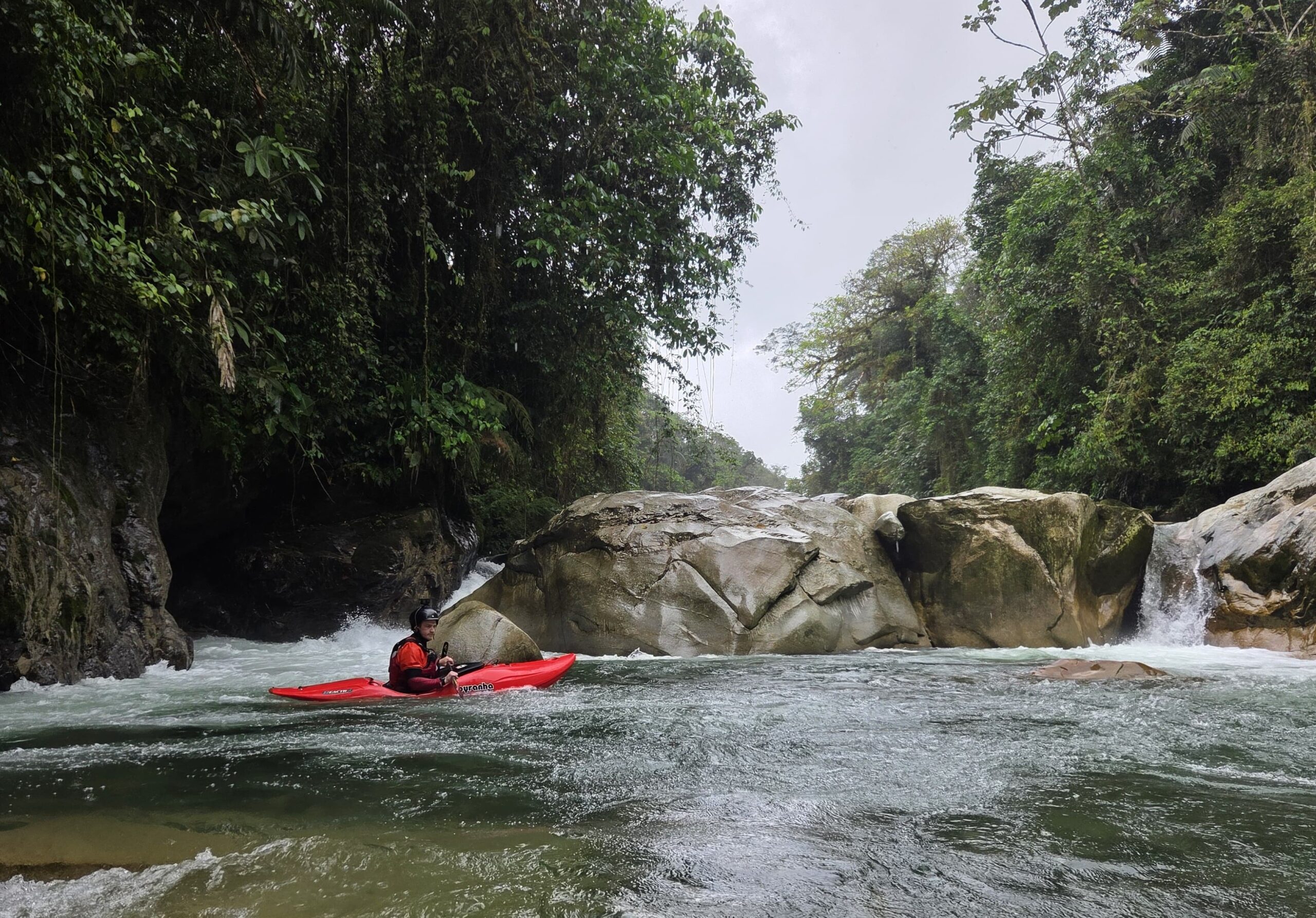
It has sharp edges for effortless navigation through large boulder gardens, and plenty of bow rocker to help boof over holes that come at you quickly in stacked sections. From the Scorch to the ReactR, the clear addition of more than 5cm of width gives this boat great stability, which I felt especially grateful for in the confused cross-currents coming down these large boulder gardens.
The pivot hull and soft, angled rear side walls enable you to move it around like you would a slalom boat. To lean back and release the nose of the boat whilst experiencing minimal water resistance around the tail opens up the possibility for low-angle eddy turns, making for super-fast entrances and exits – and not only in the conventional way either. Driving deep into an eddy, pulling one sweep stroke to maintain your downstream speed and simultaneously turning your nose back into the flow, as if paddling a downstream gate through an eddy, was a particular favourite of mine to do in this boat.
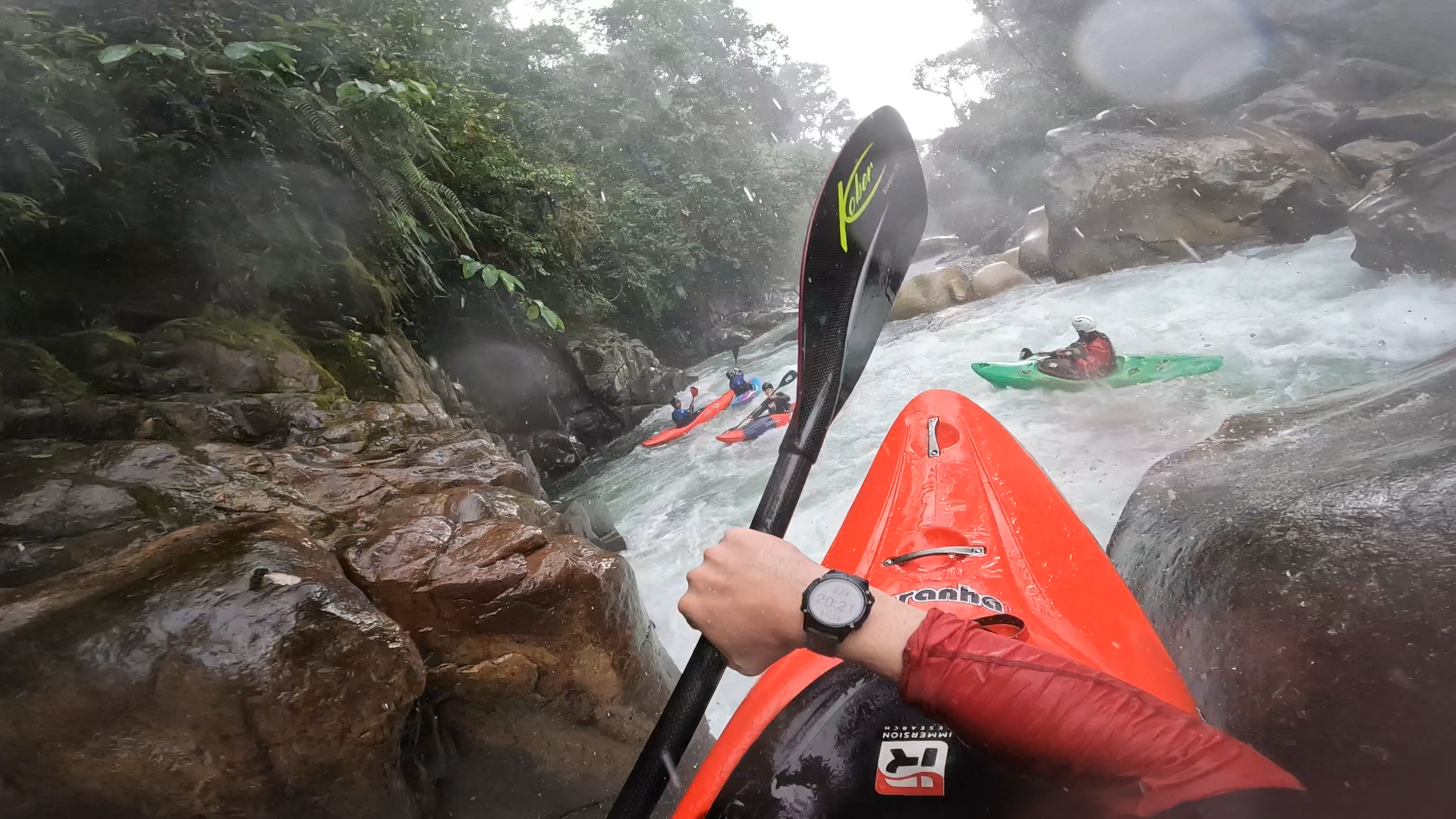
A highlight of the trip was the Middle and Lower Cossanga. High-energy water pushing its way down through large boulder gardens whilst being at the bottom of a 100m gorge is a pretty epic place to explore. What made this section a little more sporty for us was the heavy downpour of rain as we started the lower section. The guidebook descriptions of the rapids no longer resembled anything we seemed to scout, but everything still ran cleanly. Working efficiently as a tight-knit group, we navigated what would be considered the upper end of our class 4 read and running abilities. The ReactR really came into its own for this. The stability in pushy water, its bow rocker to help boof big holes that sprung up on us, and the ability to change direction super quickly when avoiding monstrous holes. The lower Cossanga then joins the Quijos, on a section which we had done earlier in the week. Arriving at the confluence this time was a mild relief to be out of the ever-rising, steep-walled gorge, but it was clear to us that it was now a lot higher than before, making for some classic big-volume whitewater. The playfulness of this boat really shines on this style of water – with the flat hull, you get some incredible surfing and spins. The rocker profile, bow and stern, allows for huge air time off the back of waves and huge head-dry kickflips!
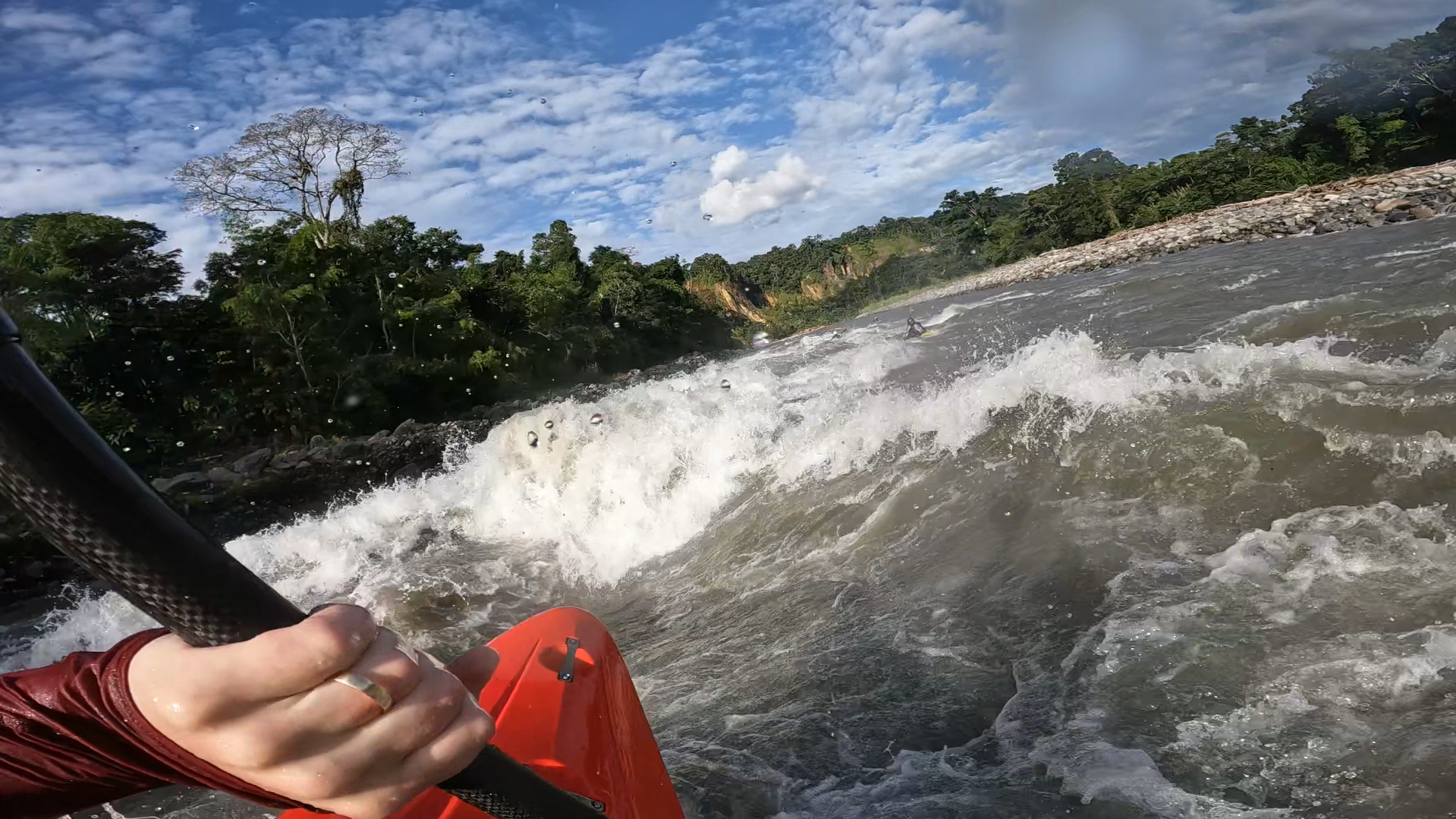
The classic sections of this valley, and one of every visitor’s favourites, is Casa de Queso (Cheese House). This section is much steeper and therefore lends itself to being run at lower flows. Its steep creeking style goes on for kilometres, with clean, continuous whitewater the whole way. We had met a guy named Thomas, in his 6th season in Ecuador, who showed us down in just 45 minutes. Steep boulder gardens often have particular channels to navigate, and rarely all in a straight line, so constantly adjusting my angle and position between rocks and crossing currents was the aim of the game for this river. This section really showed the ReactRs creeking ability; namely, its nimbleness and ability to throw low-angle sweep turns before accelerating away from boulders and sieves, and its almost always dry nose for satisfying boofs. All these same attributes were appreciated when we moved south to Tena on the Upper Jondachi, another Ecuador classic.
Whilst in Tena, we stayed at Jungle Roots, owned by Diego, a local professional kayaker who also runs a charity called Yaku Churis. This programme enables kids in deprived areas to learn to kayak and gain tuition in leadership skills. We got to meet and paddle with two of the kids on the programme on their local section, the Jatun Yaku. Another big-volume section, with surfing and kickflip joy all around. Following the kids into all the big holes and watching them flying off big waves with various rotations was such a special time. It was a real example of how kayaking is a great way to have fun and connect with your local river and the wider area. I would highly recommend visiting Yaku Churis’ website to learn more about the project and the dangers this river, local area, and community face.
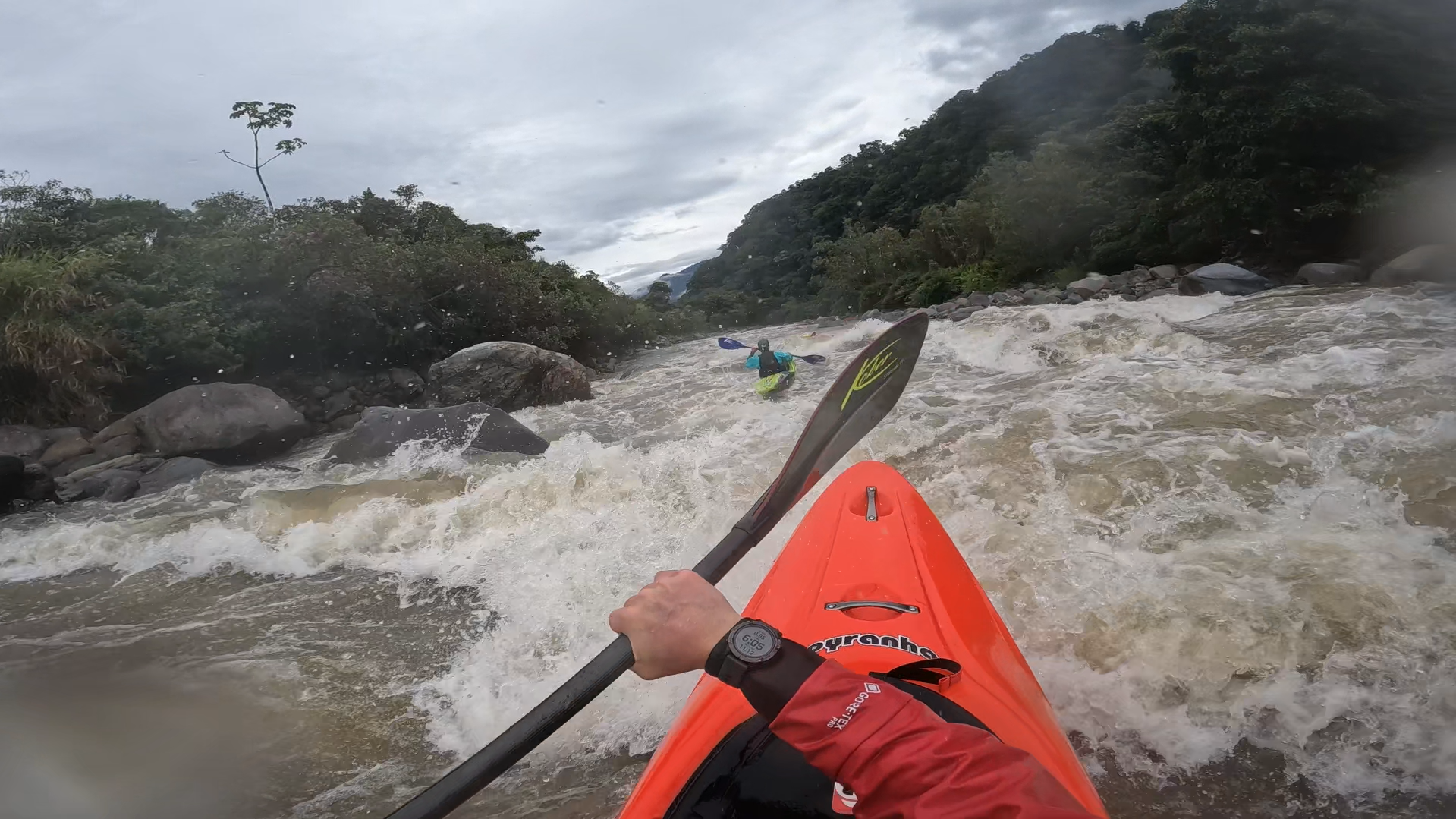
Throughout the 2-week trip, we racked up over 150km of paddling, and I certainly appreciated having the comfy Elite Outfitting for all of that. Some days we’d be on the water for 3-4 hours straight, so comfort was key! I like having my throwbag on a waist belt just under my spraydeck in front of me. I was still able to fit my water bottle and drybag with a camera between my legs, making for easy, quick access to both footage and hydration!
The ReactR is capable of running all the whitewater you may face, and you’ll have a lot of fun whilst doing it. Ecuador has kilometres of incredible whitewater of all styles that will keep you entertained for years, let alone just a short trip! If you’re visiting Ecuador and need a medium or small ReactR to rent, you can find one at Rodrigo’s.