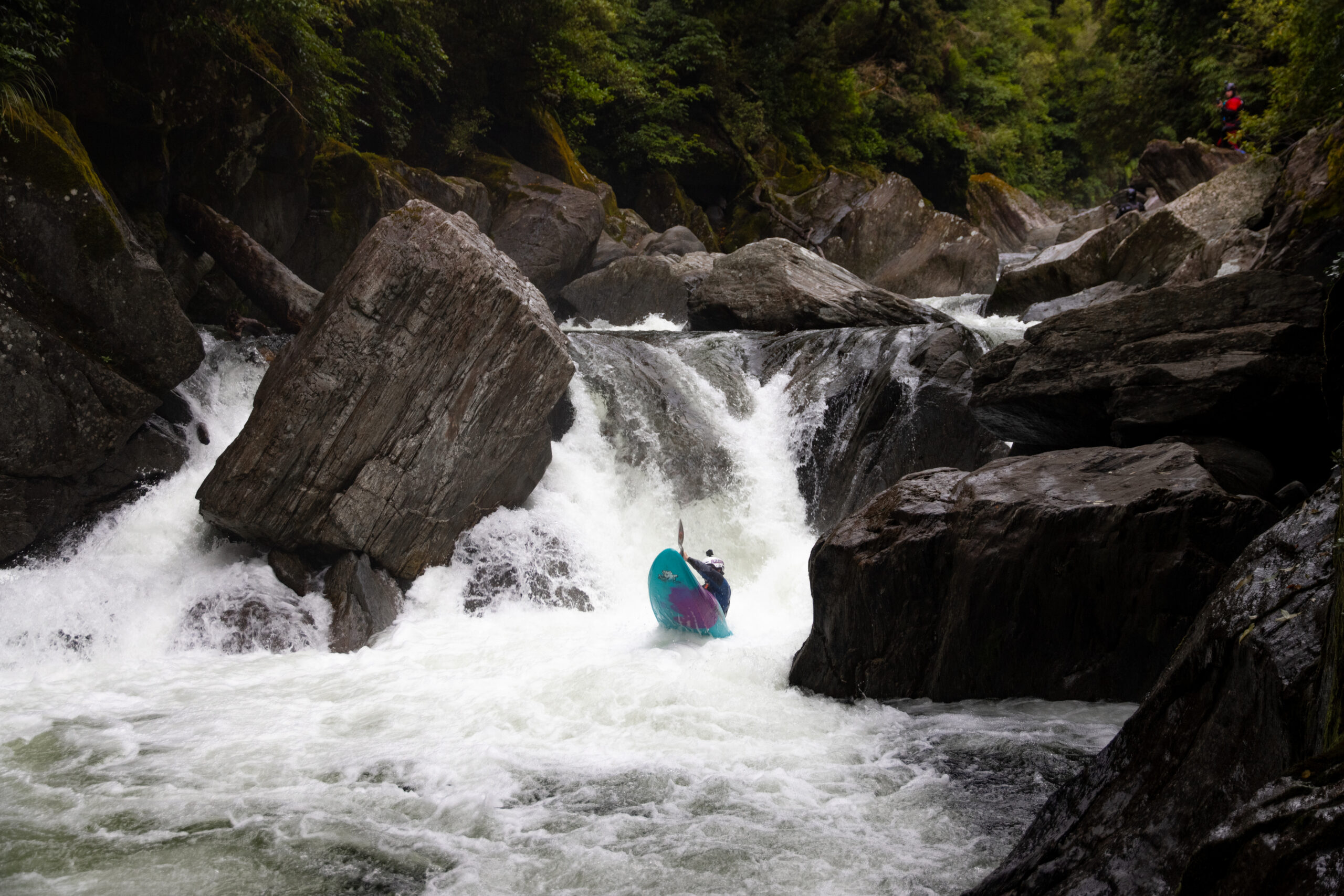
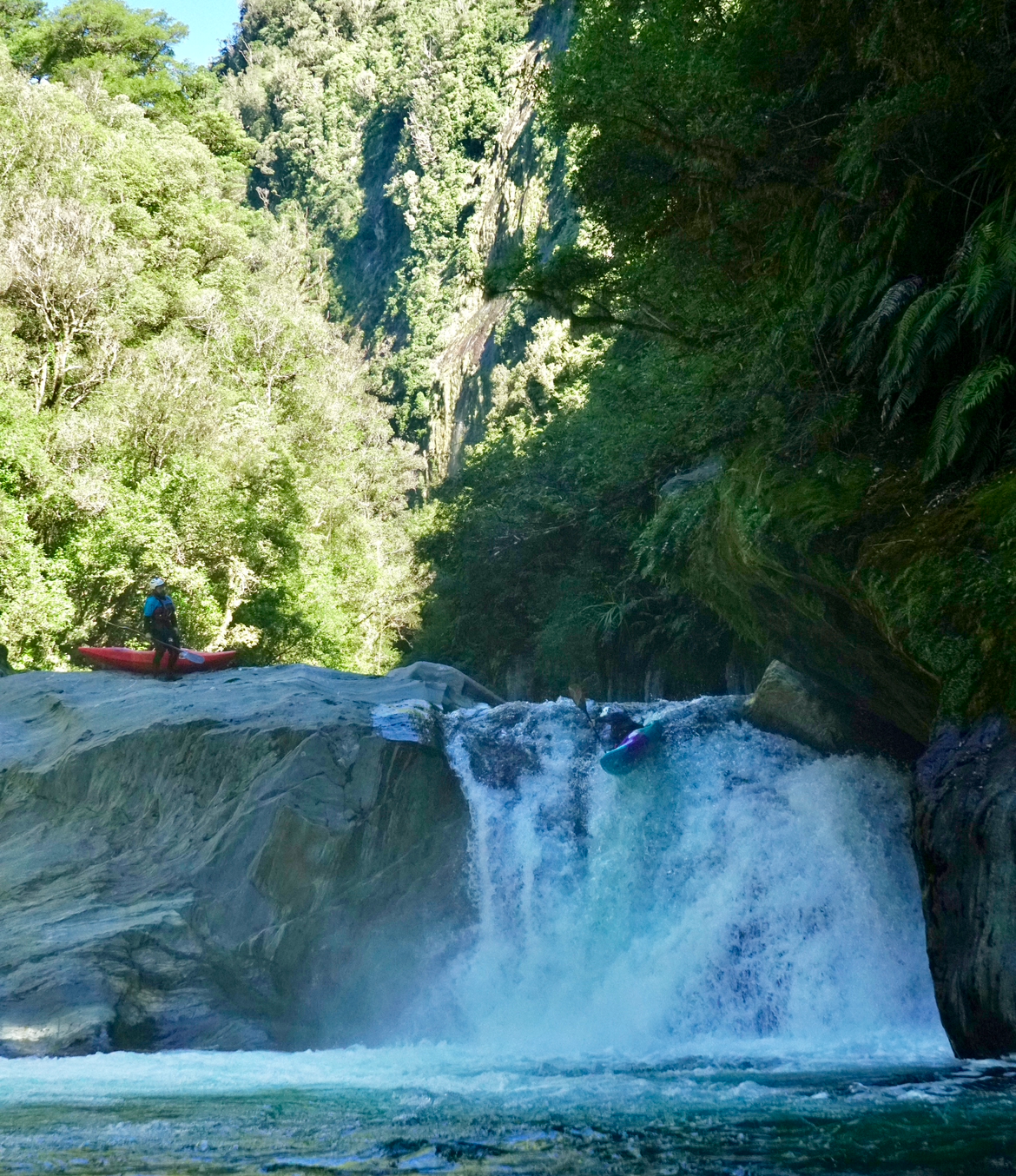
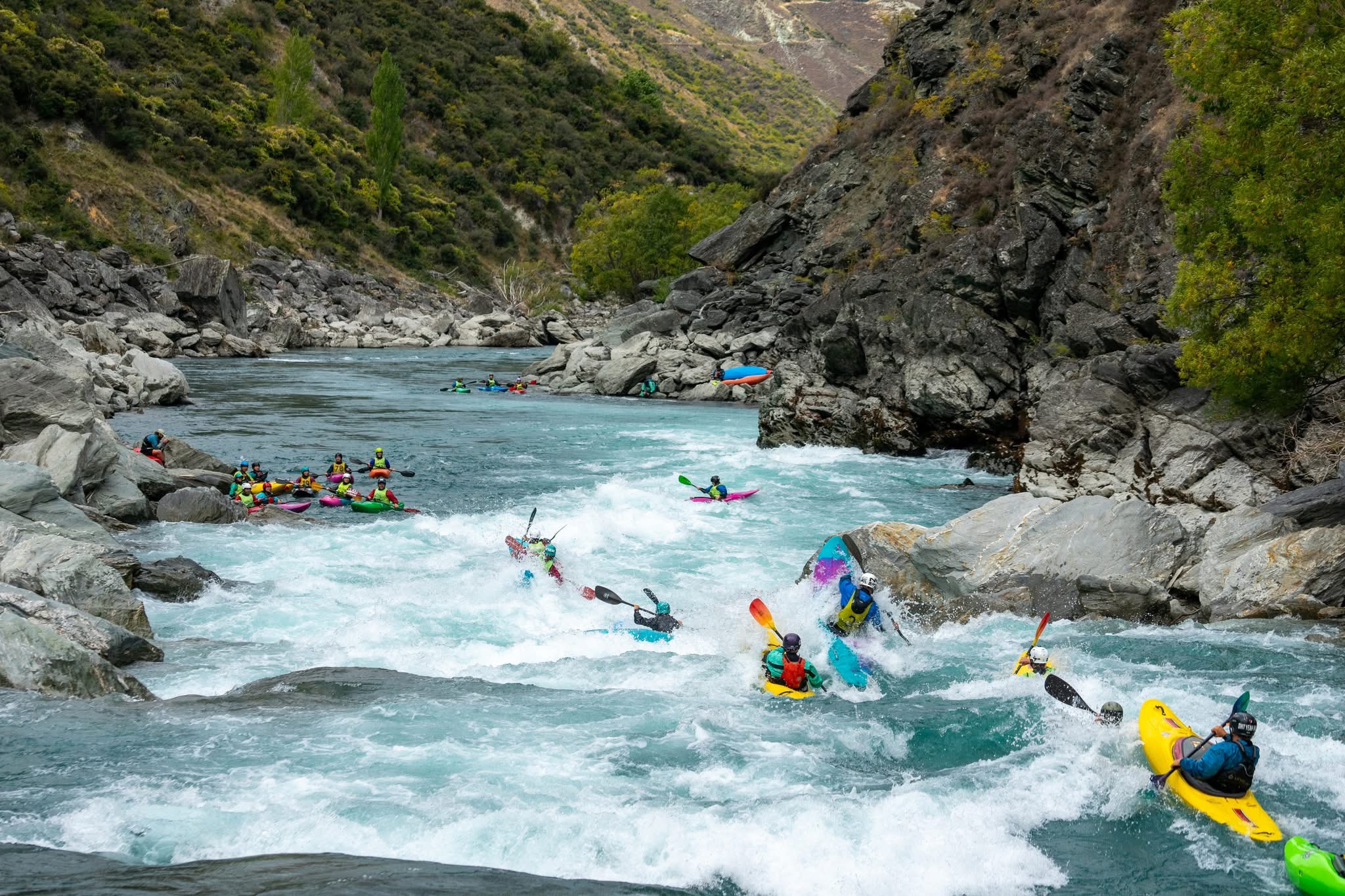
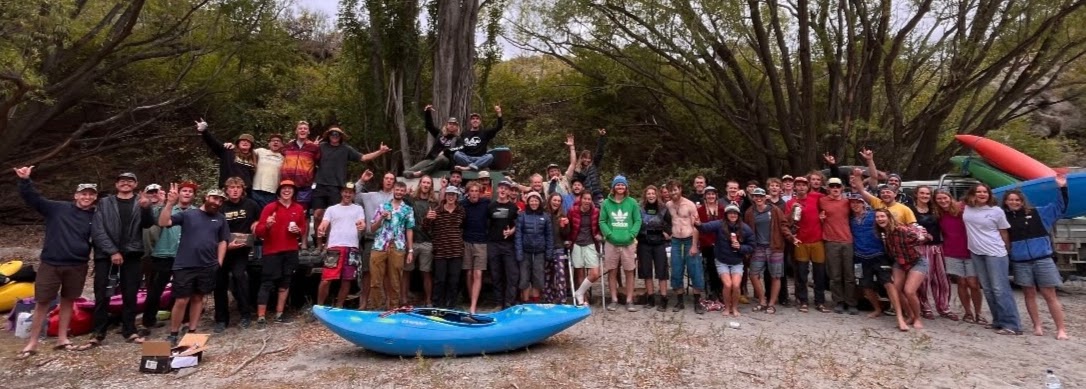
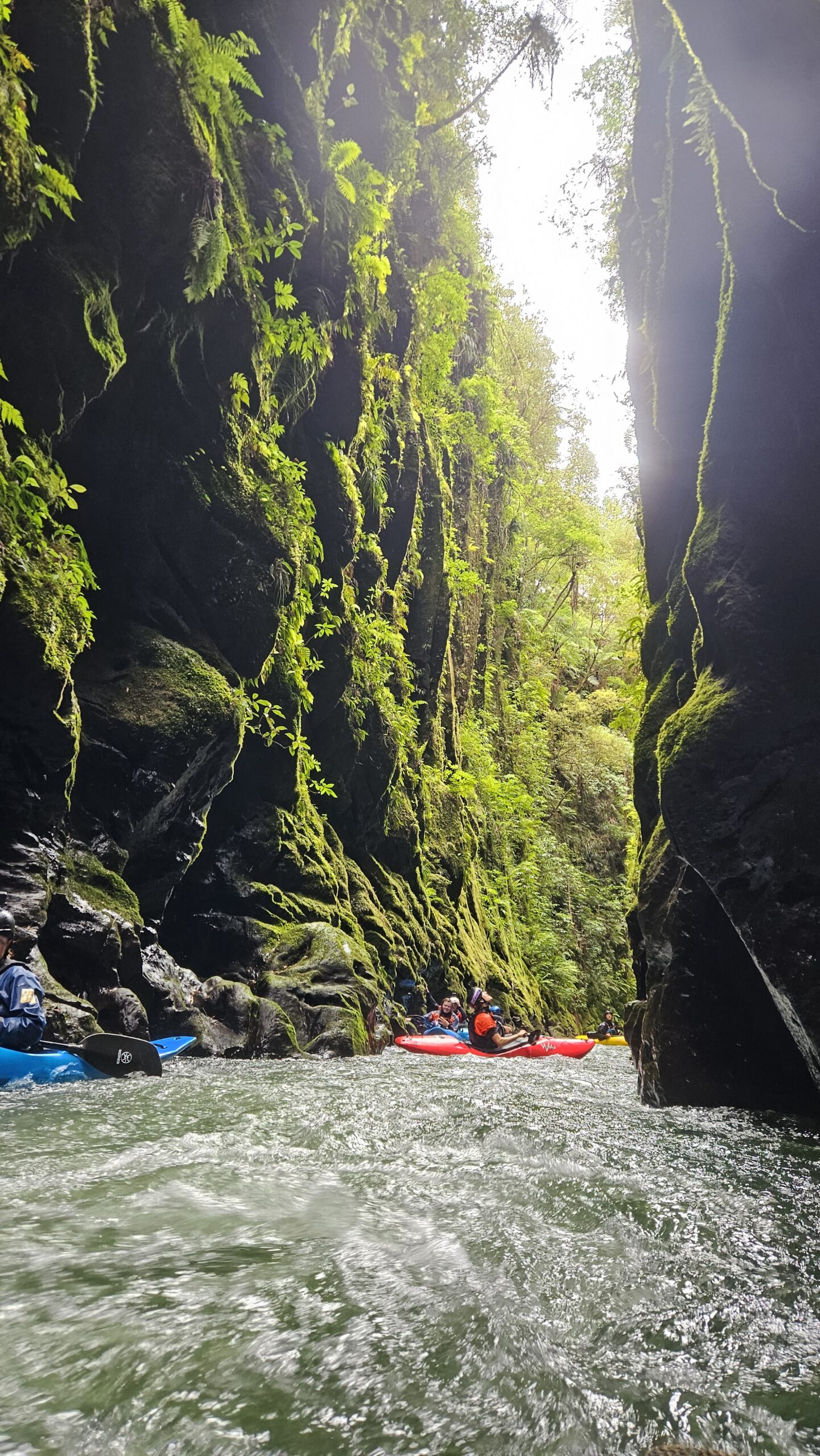
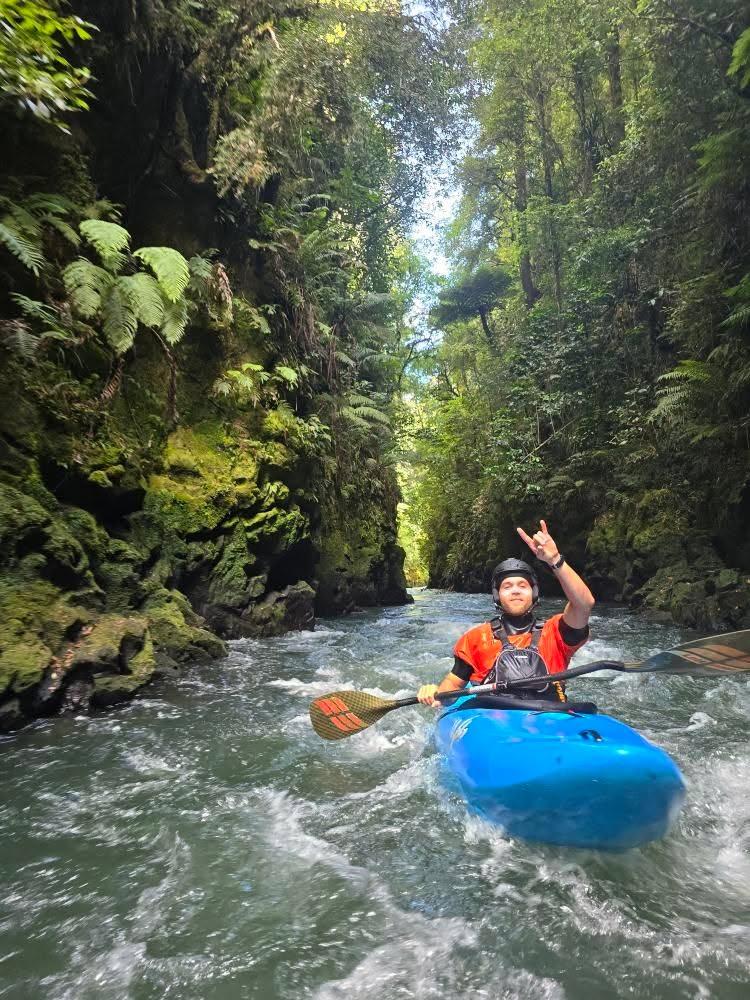
The NZ Extreme Whitewater Race Series consists of four events split over the North and South islands of New Zealand. This year, the full series did not go ahead, but we were able to partake in 3 events of the series: the Wairoa Extreme Race, Buller Fest, and the Citroen Extreme Race (Nevis Bluff time trial remix). Each event took place over the space of a weekend, each a week apart. Joined by Rhys Thompson and Josh Scarlett, we made our way around New Zealand, going to each event and paddling along the way.
The first of the three events was the Wairoa Extreme Race put on by Sam Ricketts of the New Zealand Whitewater Academy. The Wairoa is located in the Bay of Plenty on the North Island. This dam releases once a week on a Sunday and provides some excellent class 4 kayaking.
The weekend kicked off with a time trial event on Saturday, held from the river’s get-on at MacLaren Falls, down to the bottom of “Rollercoaster”. Racers must paddle a 10-minute section of class 4, pool-drop rapids as fast as possible, and touch the banner to finish.
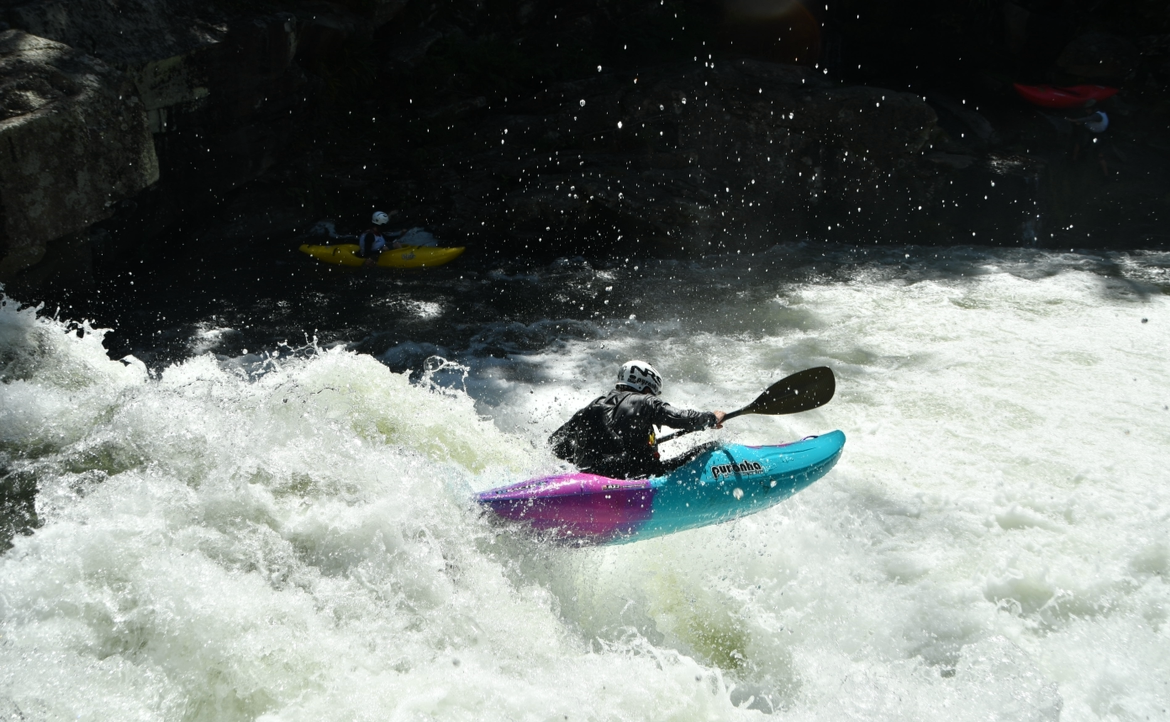
Alex flying on the Wairoa – Mathew Roxburgh
Over 40 people partook in Saturday’s time trial, who then collected themselves in the pool below the Rollercoaster for the mass start race. All 40+ people then raced 2km down to the very takeout of the river… it was chaos!
After a fun day of kayaking came a delicious hog roast, plenty of beer, dancing, and a Throw Bag Olympics run by the renowned throw-bagger and rescue enthusiast Rhys Thomson. Thanks to the event sponsors for the delicious food and drink!
A dusty morning setting up the course and the head-to-head race was underway. Kayakers were racing the “Toaster” and “Rollercoaster” rapids in a one vs. one format. Carnage followed as most racers were elbow to elbow, pushed into holes, and slammed into each other. It was awesome spectating and great to see all the work volunteers put in to making the event happen.
During the closing ceremony, many cool prizes were given out, including some lovely new paddles! Pyranha had kindly donated a 9R to be raffled off to raise money towards the legal fees required to fight the Kaituna dam project. The fight against this dam is still ongoing. Please follow WhitewaterNZ to find out what you can do.
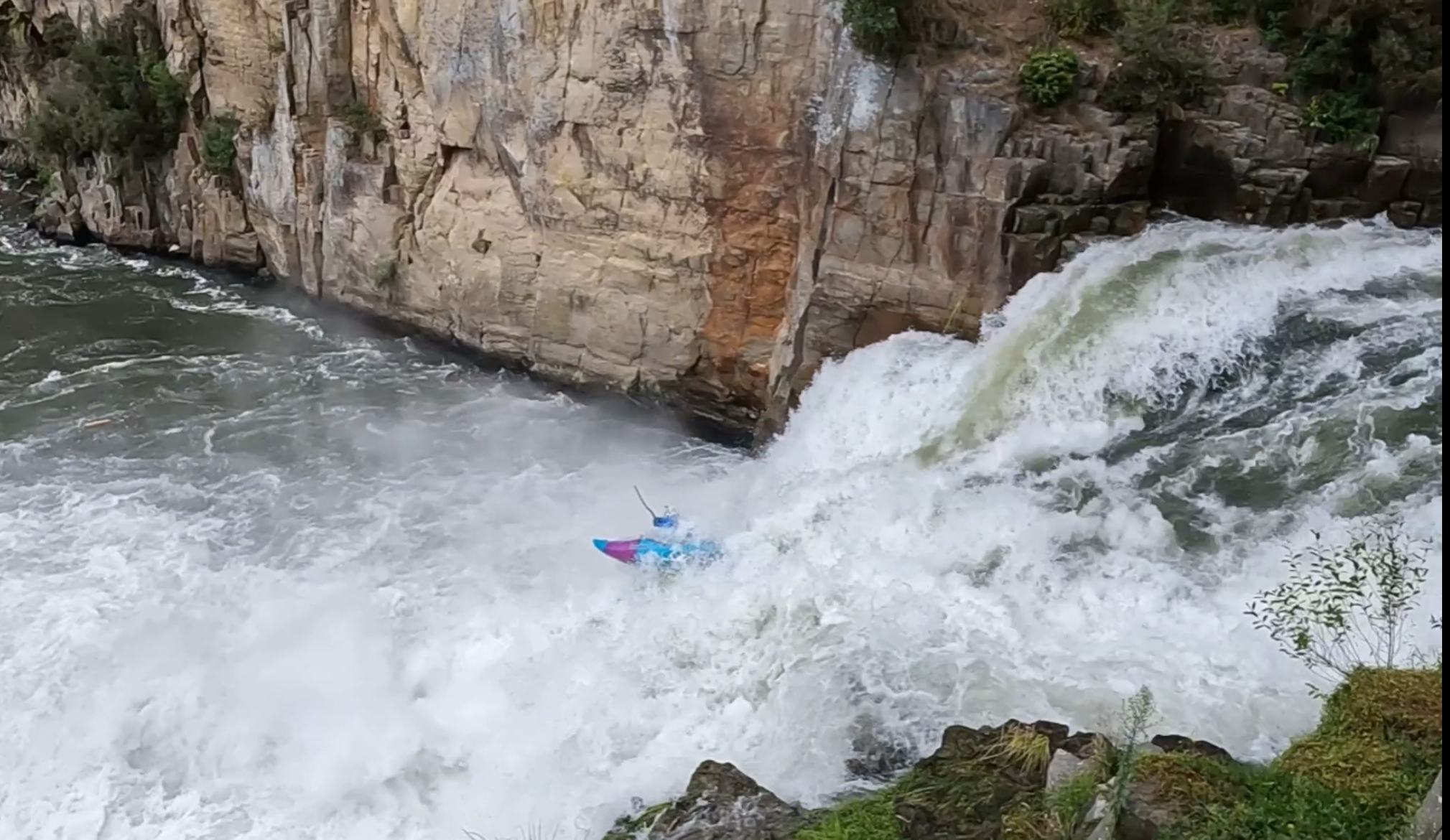
The week after the event, Rhys and I returned to work but got in an after-work lap on the Aniwhenua, a dam-released section with a fun 10fter at the end. It was a great feeling to be operating on a new section to us, and it got me excited to head south!
Aniwhenua boof! – Rhys Thompson
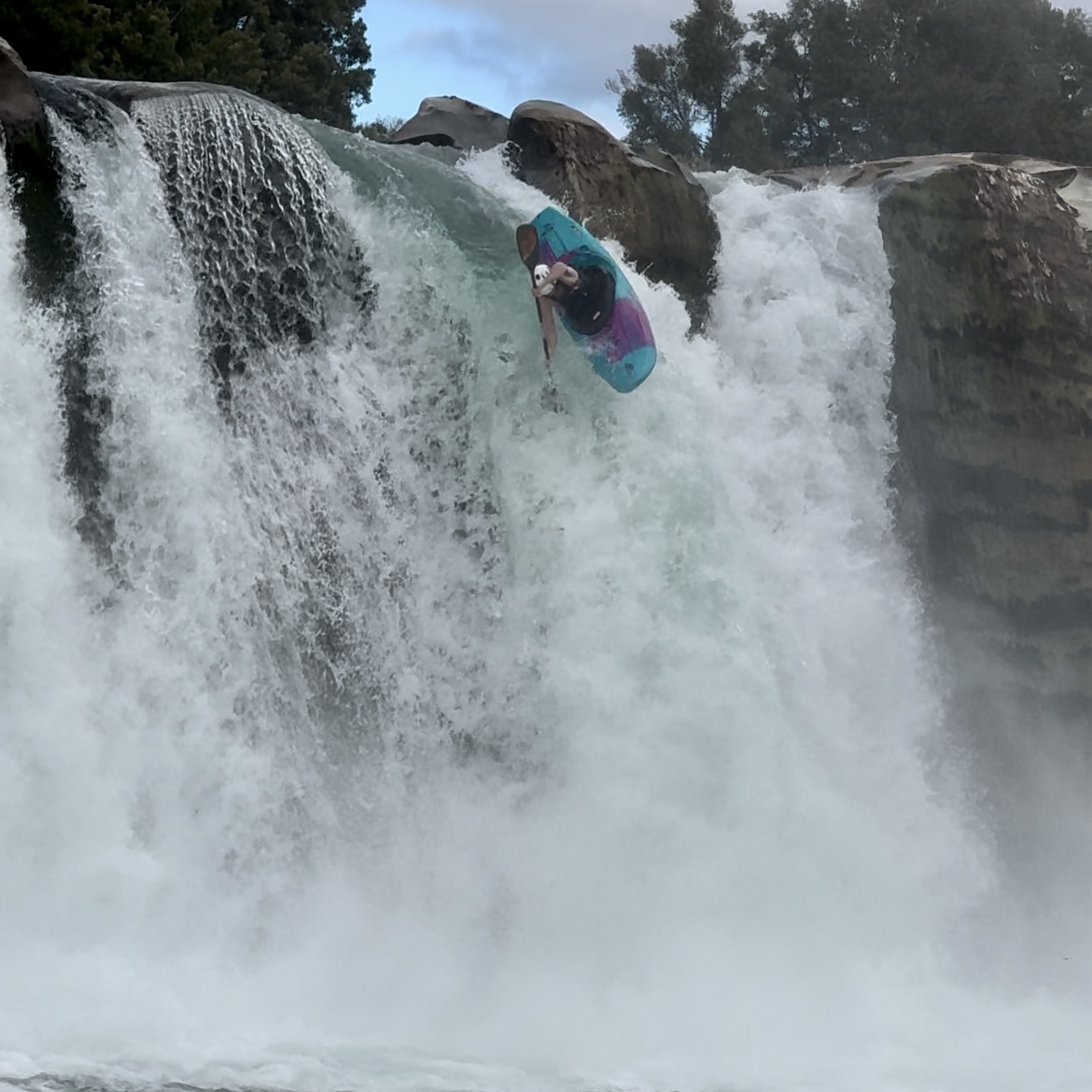
Later that week, after a punishing few hours of driving, a ferry ride, and a pizza, we arrived in Murchison, the home of Buller Fest. Upon arrival, we hit up Mauria Falls, a Murch classic. This beautiful park-n-huck 20fter made for an entertaining afternoon!
Mauria 45s -Josh Scarlett
That evening came the Awanui Film Awards. Plenty of beer and videography was consumed. The winning film, “RPM Depreciation,” was one of the funniest kayaking films I’ve ever seen and will likely become a staple of kayaking films in the future.
Saturday of Buller Fest was lively, with the slalom and rafter cross providing entertainment before a big party in the evening. Thanks to all the volunteers and the event organisers for putting together such a wholesome day!
On Sunday morning, we were all feeling pretty dusty, and the day kicked off with some friendly Boater X on the Lower Mātakitaki. It’s so good to be surrounded by such a big community of stoked kayakers, and it’s great to see so many Pyranha kayaks out on the water. 9R and Ripper 1 still pull their weight as some of the fastest boats out there!*
*Editor’s Note:The original Ripper is now available as the R.One; the same hull, at a lower price point in single colours with Connect outfitting.
Alex on the Crooked River – Josh Scarlett
On Monday, we headed down the West coast with our eyes set on some famous coast creeking. We got a lap in on the Crooked River and then continued on to the infamous T Canyon, a West Coast classic. T Canyon was a huge day out, tackling class 5 moves with exposure, tough portaging, rope work, and consequence. Super grateful to George Hayhoe for keeping us on track in there!
Alex Littlechild in the ReactR on ‘Exit Drop’ of T Canyon – Rhys Thompson.
We continued our drive down the west coast and down to Queenstown, where we were greeted fondly by the local community. Huge shout out to Matt, Morgan, Will, and Jess for letting us crash for the weekend!
Usually, this event is held on ‘Citroen’ in a Boater X format. Due to low water levels this year, the race was held on the infamous “Nevis Bluff” rapid of the Kawarau River in a time trial format. Over 30 kayakers participated in the advanced time trial, with two laps each. Pretty stoked to say that Josh Rhys and I topped out with the fastest 3 times of the day alongside Will Payton and Ben Young.
Alex Littlechild competing in the Nevis Bluff Mass Start race – Dan Sutherland
After the time trial had finished, everyone helped to get the class 3 boaters’ kayaks down to the bottom of the next rapid (Bar Fight). Then ensued a 4×4 Boater X race down some punchy class 3. There was minimal carnage, and everybody was stoked. It was a great atmosphere.
The weekend concluded with another big party and a social float on the Sunday morning—a good opportunity to reflect and catch up with friends. On Monday morning, we made our way back up the east coast to Picton and back up the North Island to our local section, the Kaituna.
Thanks to everyone who welcomed us, fed us, danced, kayaked, and laughed with us. A truly memorable couple of weeks. Shot team. x
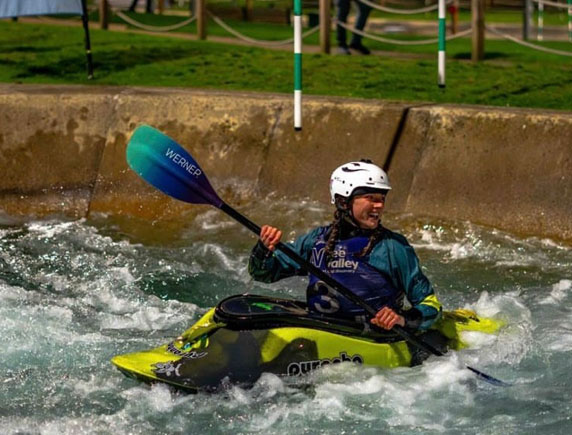
Hi! I’m Holly, a 21-year-old university student and a member of the University of Bristol Canoe Club. Kayaking has become a huge part of my life, and I love getting out on the water whenever I can.
I was first introduced to kayaking at university through the University of Bristol Canoe Club and have been paddling for 3 years now. During that time I have fallen in love with this sport and now couldn’t imagine a life without it.
Like many beginners, I started with club kit, but after a year, I was ready for my own boat. This was when I got my beautiful, pink, second-hand Pyranha Z.One, which was a fantastic boat for learning and honing my skills. It gave me a solid foundation and prevented me from developing any bad habits. However, as I began tackling more challenging rivers, I realised I needed something more capable.
When it came time for an upgrade, I demoed several boats at the Tryweryn from Radical Rider, including the Small Ripper 2. But as soon as I paddled the Firecracker, I knew I had found the one.
The Z1 was a fantastic starter boat!
From the moment I hopped into the Pyranha Firecracker 232, I knew it was something special. As a shorter paddler (5’3”, 65kg), I struggled to find a boat that felt proportional, but the Firecracker nails it. The shorter length provides a sense of connection and control to the bow, which I didn’t feel in longer boats. In the Firecracker, I feel balanced and in control, which makes every movement feel intentional and precise.
If there is one word to sum up the Firecracker, it is playful! No river is dull in this boat. Whether it’s a gentle section of river or feature-packed whitewater, the Firecracker brings the fun. Tailies are effortless – smooth as butter – and the vertical stability makes them feel incredibly natural. The shorter tail creates more opportunities to get vertical, even on shallow rivers. The wide hull means surfing on any wave is smooth and easily controllable. I can’t wait to push my down-river tricks even further.
The Firecracker 232 in action
Even though it looks like a small boat, the Firecracker packs a surprising amount of volume. This makes it stable and confidence-inspiring without compromising its playful nature. The large bow rocker allows it to skip over holes effortlessly. This has given me the confidence to push myself into bigger water and more technical rapids. I am currently a grade 3+ paddler pushing into grade 4. I really appreciated the extra stability when going down more technical higher-flow rivers such as the Upper Dart and the Tawe, as the Firecracker gave me the confidence to focus on my technique and line rather than worrying about getting knocked off balance.
You’d think that, with this boat being so short and wide, it might be slow, but the Firecracker defies expectations. It holds speed well through holes and boils, allowing me to keep up with longer boats. The sharp rails make eddy-hopping a dream, as it snaps into even the smallest eddies with ease, making it an excellent choice for technical rivers where quick adjustments are key.
The Pyranha Firecracker 232 is everything I could want in a boat – playful, stable, and agile. It has the perfect balance of stability and liveliness, making it an excellent choice for paddlers, such as me, looking to push their skills while having an absolute blast on the river. For me, the Firecracker 232 is the perfect balance of fun and performance. It’s given me the confidence to push into harder whitewater while still making every river feel like a playground. No matter where I take it, I always come off the water grinning—this boat just makes kayaking more exciting.
Chile is well-known in the whitewater community as a must-visit destination for kayakers of all abilities. This reputation stems from its incredible variety of rivers, ranging from scenic grade 2 runs to mind-blowing waterfalls. In November 2024, I was lucky enough to get a taste of what Chile had to offer!
Like any kayaking trip to a new place, my mind was buzzing with ideas of what I wanted to accomplish—from dialling in my cobra flip on the Rio Palguín, where it was invented, to running stunning 20-meter waterfalls with my ReactR and perfecting my technique. However, the first challenge Matti and I faced was simply making it as far as the airport in Santiago, Chile.
After spending an extra day at the airport in Brazil due to a cancelled flight, we finally arrived in Chile late in the evening. To our surprise, the boats had also made it! We kicked off our first day bright and early with a fast lap on the Maipo—a 15km run packed with wave trains, holes, and good vibes. After that lap, I completely forgot the long and complicated journey of the previous days.
The first waterfall and river on my mind when I knew I was going to Chile was the La Leona waterfall at the end of the Rio Claro—a 70-to-75-foot drop gushing out from a tight canyon in the cliff. I knew this was usually an early-season drop, as it needs enough water to navigate the entrance rapid and allow for a clean line off the lip. With us heading out a couple of weeks later than usual—and further delayed by our travels—I started to lose hope of running this classic. Sure enough, it was too low when we arrived to scout it.
Not letting this dampen our spirits, we were still thrilled to paddle the Rio Claro, a stretch of whitewater I can only describe as something straight out of a dream!
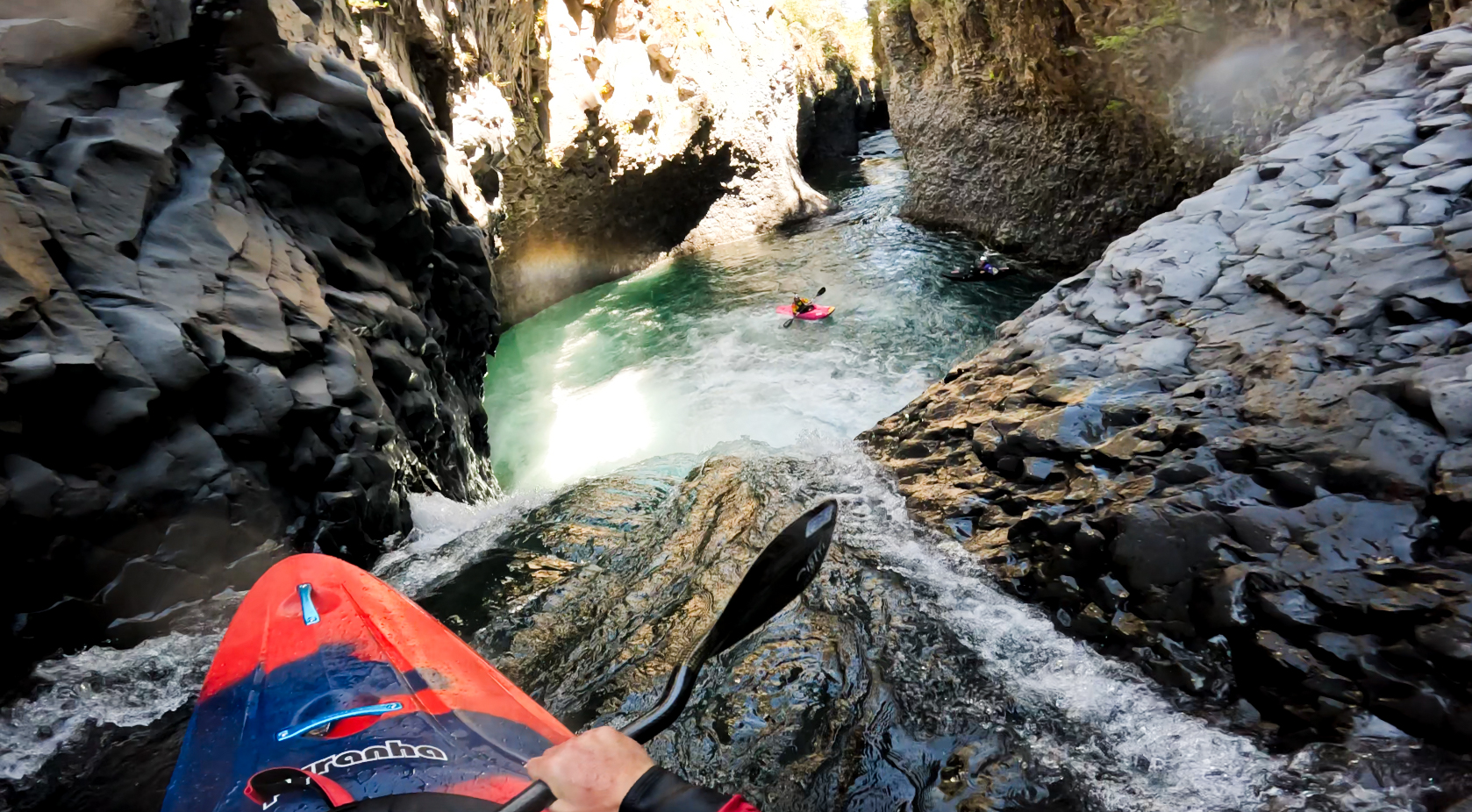
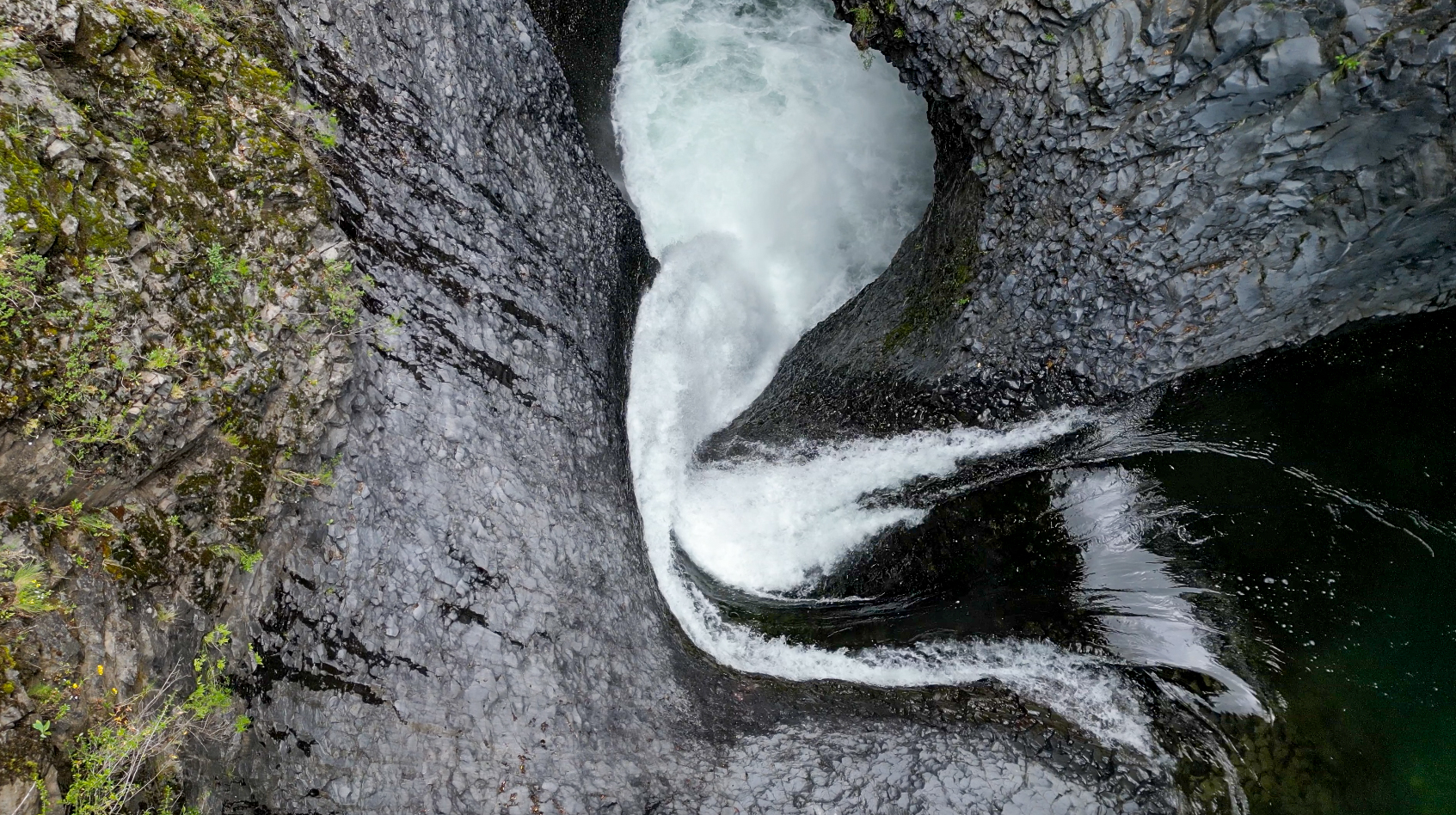
The first section of the Claro we paddled is called “Veintidós Saltos.” As the name suggests, it features 22 waterfalls of varying sizes, winding through a tight canyon with even more waterfalls cascading in from the sides. After finishing this section, we transitioned into the lower section, “Caracol.” This part is home to one of the most unique waterfalls I’ve ever seen: Garganta. Here, erosion has sculpted the rock into a spiral slide (like a waterslide) that drops another 20 feet into the pool below.
Salto Garganta – Rio Claro
Although my line on Garganta was good, I took a hard hit to my back, knocking the wind out of me and leaving me in significant pain for the following days. Unfortunately, this meant I had to sit out while the rest of the crew basked in the glory of the Claro.
For the next couple of days, I was feeling pretty sorry for myself and doing everything I could to loosen up my back so I could get back in my boat ASAP. Thankfully, my patience paid off. When I finally felt well enough to paddle again, rain the night before had raised the river level, making La Leona runnable!
Without hesitation, I grabbed my gear, jumped in the car, and began the process of thoroughly scouting the waterfall and entrance rapid from the bank. Once the plan was set and the safety and media crew made their way to the waterfall’s base, Dane and I climbed to the top of the committing canyon leading to the drop.
After navigating the first four rapids, we reached the crux move—a tricky section where you have to carry speed from left to right and land in a chaotic, turbulent chute of water about 15 meters before the lip of the waterfall. I watched Dane go first, nailing a clean line before disappearing over the horizon. Then it was my turn.
My entrance line wasn’t as clean as I’d hoped, but I managed to stay upright. With the crux behind me, I focused on savouring the moments leading up to the free fall. The feeling of free fall brings me a sense of calm I can’t quite describe—time slows, and I feel completely in control. This time was no different.
Photo by Andy Kettlewell
As I surfaced and Matti helped pull me upright, I couldn’t help but celebrate. I had successfully run a waterfall I’d been dreaming of paddling for years—a truly surreal moment!
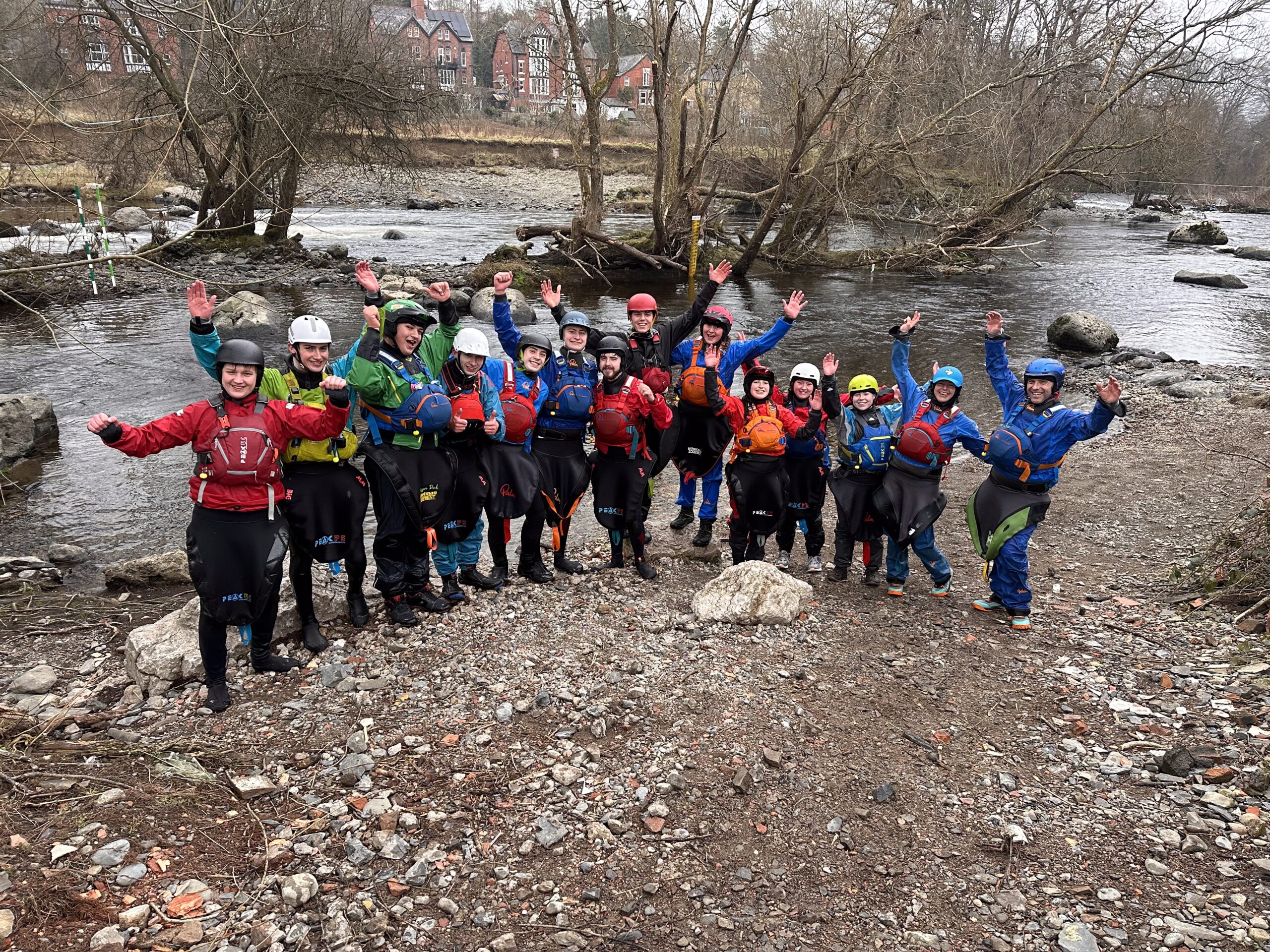
After the club’s incredibly successful fundraiser, ‘Get F*****d for Fitz,’ earlier this academic year, 12 club members were able to attend a WWSR course in February; double the amount from previous years.
Strong WWSR skills are vital in the sport, particularly within university clubs, where many young people are trying out the sport for the first time and have little confidence on the water; seeing well-trained leaders gives them a lot of reassurance. As a more senior member of the club, I was eager to attend the course so that I could step up into a role as a club leader.
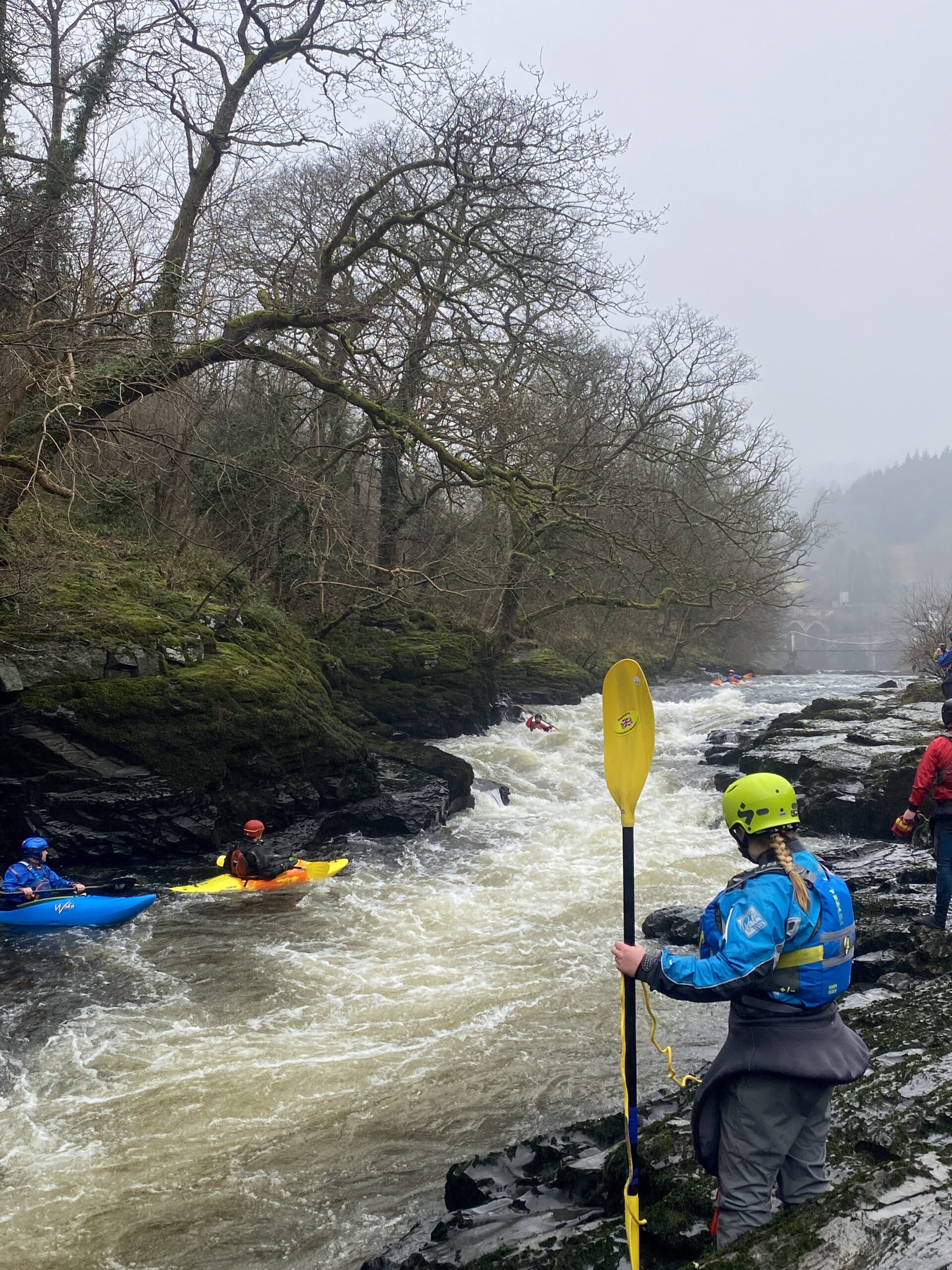
Joe expertly demonstrates how to rescue a boat safely
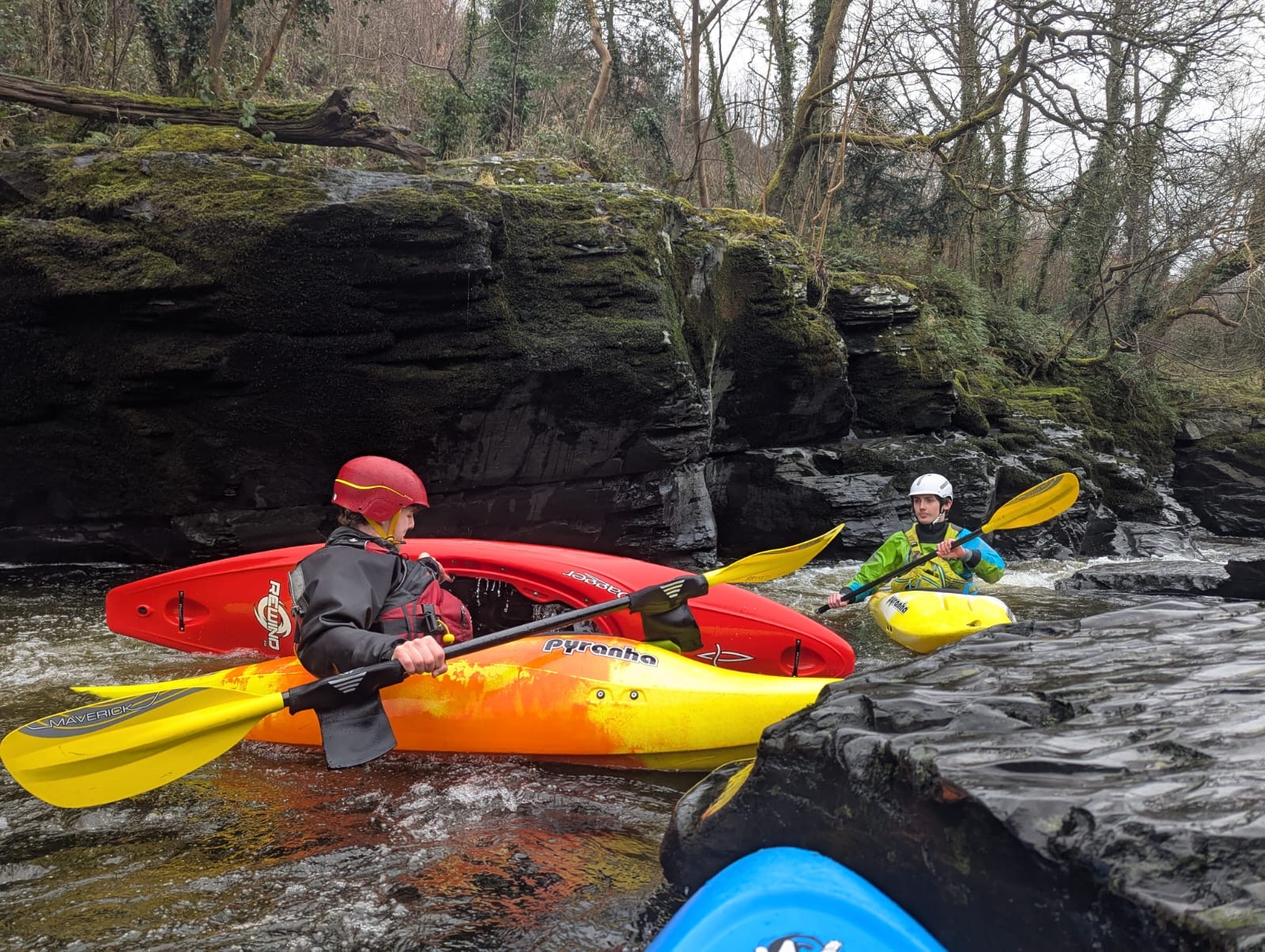
The weekend began with a late Friday drive up to 1st Llangollen Scouts Centre, who were providing us with their hall as residence over the weekend. After a good night’s sleep, UOBCC were up and raring to go, fuelled by bacon and slightly cold scrambled eggs (we might have to enrol in a cooking course next). After an introduction and brief talk with course coordinators Lowri and Ian, the group got on just above Horseshoe Falls, and we spent the day slowly making our way down the river, occasionally stopping and discussing whitewater skills such as scouting rapids and leading.
Just before Serpent’s Tail, the most difficult feature on the river, we portaged and talked about taking lines and setting safety. Despite the low water level, the feature is a G3, which is a good challenge for most of us on the course, so it was important to scout and make sure the feature was runnable and that we could confidently run it. Myself and another on the course ran the feature before setting up safety for the remaining group, allowing us to get our first practice using throwlines.
Scouting and setting up safety at Serpent’s tail
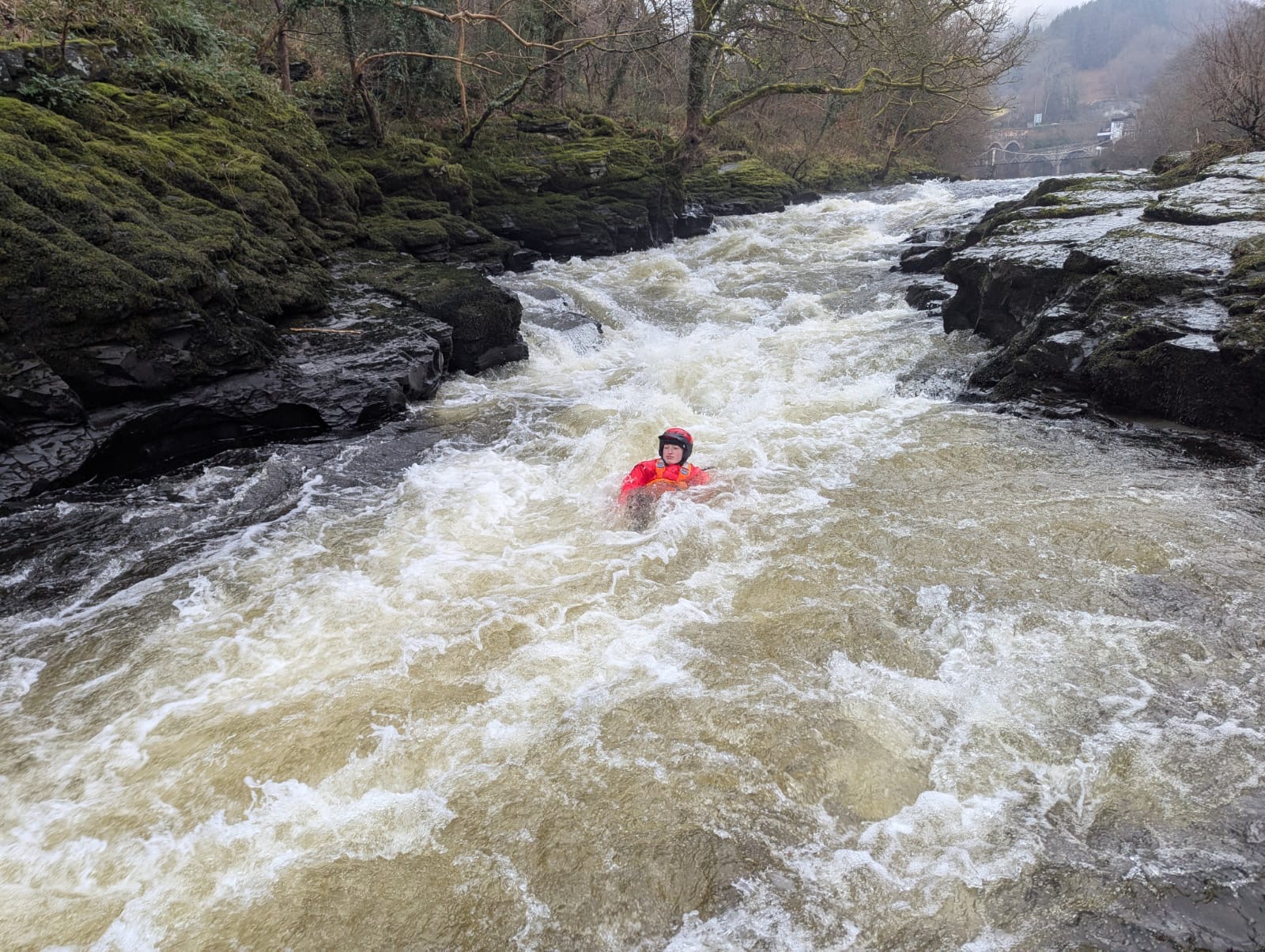
After the group had run the feature, my smugness at staying nice and warm was quickly dissipated as we then practised swimming in the feature to become more comfortable with aggressively swimming to catch eddies (bear in mind this was mid-February, with temperatures of about 3°C). Once we had all been sufficiently drenched, we continued on down the river to Mile End Mill, quickly having a surf before continuing on to the get-off just before Town Falls. Fortunately, the accommodation was a short walk from the get-off, so we all quickly got inside, warmed up, and finished off the evening with a classic kayaking meal – Spag Bol (penne, not spaghetti, though sadly).
How to swim in whitewater
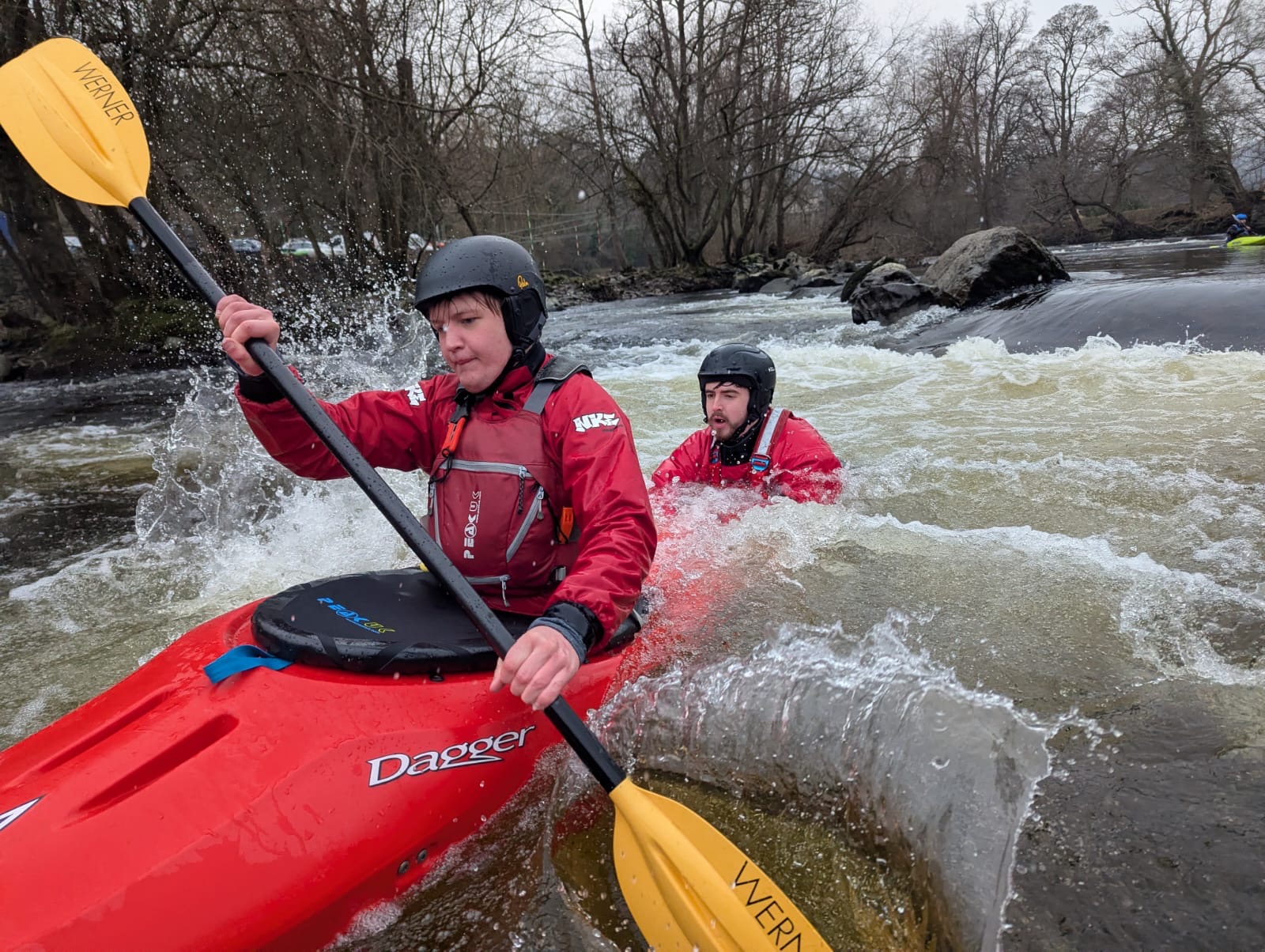
The next morning, we spent some time in the accommodation with Lowri and Ian, practising using throw ropes, carabiners, and slings to devise ways to unpin boats, notably the Z-drag pulley system. Subsequently, we headed back to Mile End Mill for some more swimming, throwlining, and rescuing practice, with frequent breaks to head into the café and warm up as it was even colder than the previous day. We finished off by plunging down the weir and some even body-surfing the wave (I was too cold for that!), followed by a final chat before being awarded our certifications. A quick 4-hour drive back, with a stop off at McDonald’s (in true UOBCC fashion) before heading back to the club stores and then into my nice, warm bed!
More swimming and rescuing…
I’d like to end this blog by thanking Lowri and Ian again for their delivery of the course, I learnt a lot of new and important skills and have definitely gained confidence to take canoebies on rivers in future. I will be taking on the committee role of Training & Development Officer in the coming academic year, and so organising the next set of paddlers to go on this course. Hopefully, we can continue to send another large group and get more experienced leaders qualified for the club!
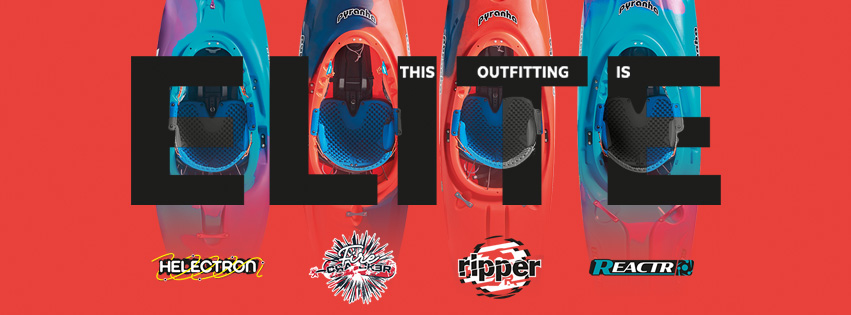
We know a lot of you have been waiting on this news, and we’re excited to let you know that as well as featuring in the Helectron and ReactR, Elite Outfitting is available RIGHT NOW in all sizes of Firecracker and Ripper 2!
Order now by hitting up your Local Dealer or heading over to the Pyranha Customiser, where, as well as Elite outfitting in the models mentioned above, you’ll find new handle colour options for all models, new logo options on Firecracker and ReactR, and the Helectron in all three sizes.*
*Helectron Large is available for pre-order, with this size expected to enter production by late March.
Learn more about Elite Outfitting:
You can read the full story of our new outfitting system in our Elite Outfitting Deep Dive, or check out the walkthrough video below:
Quick-Fire FAQ
How is Elite outfitting different?
Elite outfitting has been redesigned from the hull up as a complete overhaul, reducing the overall boat weight (for example, the ReactR is a bigger boat than the Scorch, but lighter), markedly improving both comfort and connection to the boat, and adding to the ease and range of adjustment, all without compromising on safety, durability, or cost.
How reliable are the backrest cleats?
We’ve done extensive development and testing to ensure our new backrest system retains all the pros of a cleat system, adds more to the list, and negates the downfalls seen in other cleat-based systems. Our system uses high-strength Dyneema cord and high-quality aluminium racing cleats, both of which have excellent longevity and work together reliably. We’re excited for you to discover and enjoy the benefits of this setup!
Does Elite outfitting include hookers?
Yes, and what’s more, these ones have 3-way adjustment for leg angle, amount of grip, and the usual forward/backward adjustment.
How has the seat adjustment changed?
Seat height is still adjusted by adding shims under the seat pad, but the forwards/backwards adjustment is now done by removing a single wingnut, quickly sliding the seat to where you want it, and then replacing it.
What’s the knee-padding situation?
Elite thigh grips have oversized pads which adjust with them and cover your knee.
Can I fit Elite outfitting to my current Pyranha boat?
No, the Elite outfitting is not backwards compatible due to the necessary cockpit rim features and method of hull stiffener attachment.
Has the cockpit rim shape changed?
The outside shape of the Firecracker and Ripper 2 cockpit rims have not changed; we worked on these shapes in partnership with leading spraydeck manufacturers, and have carried through those lessons to the ReactR and Helectron. However, the inside shape of the Firecracker and Ripper 2 cockpit rims have several changes related to the fitment of the new Elite outfitting system, and in particular, a deepening and padding of the area of the cockpit rim that rests on your shoulders/against your hip during carrying.
How easy is it to access the stern, and how much gear can you get back there?
We’ve changed the connection between the backrest and seat so that it can be completely unclipped, and with the lower back edge of the Elite seat, it’s easy to get a two-piece split paddle and/or the typical size of dry bag for other gear back there.
Kayaking is about exploration. Whether you are exploring the limits of your body while blazing a path through a first descent in Columbia or simply discovering your backyard creek, a whitewater kayak and a paddle open an aquatic world of learning, feeding one of the most basic human compulsions: to explore.
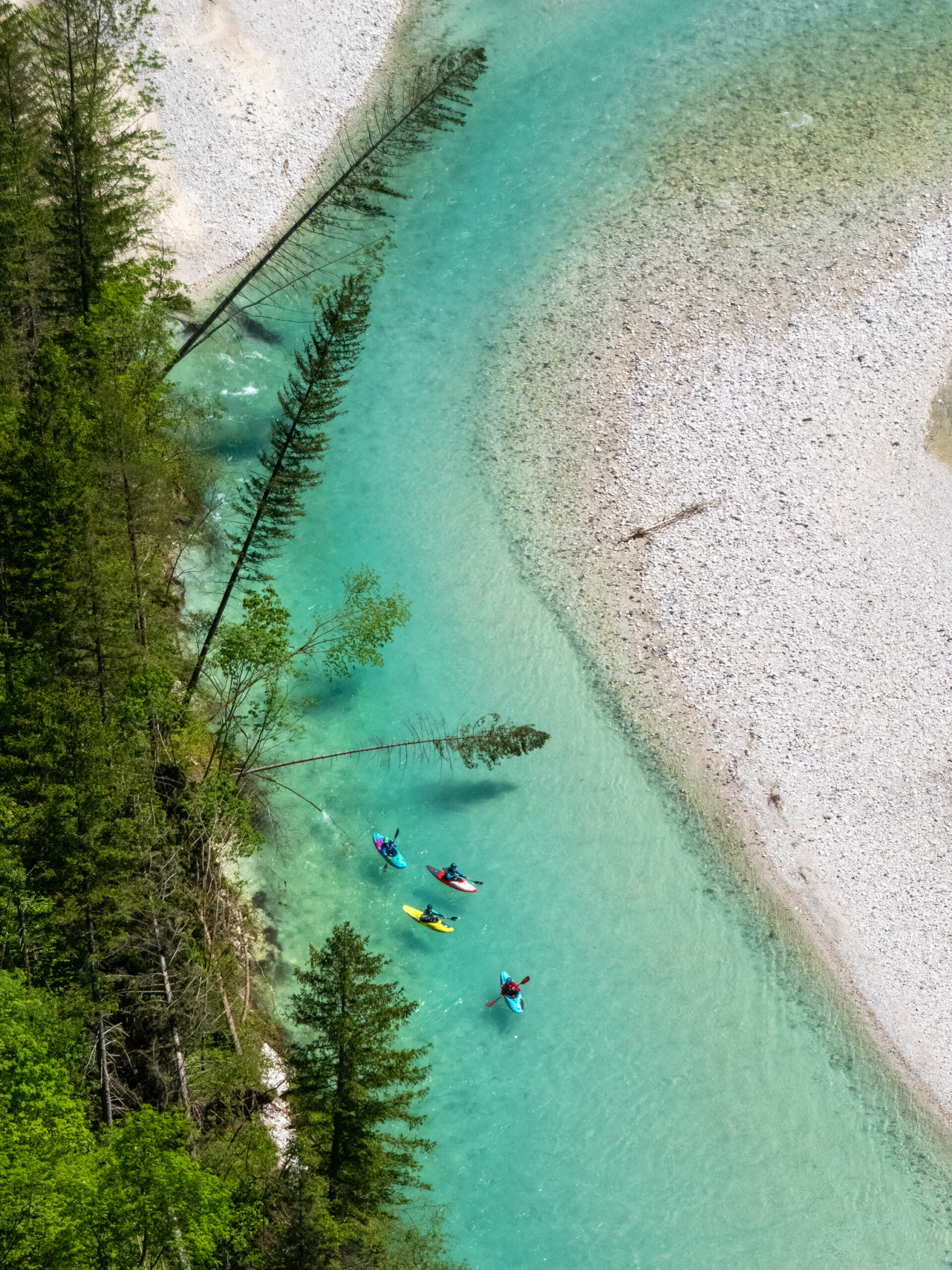
Paddling a river from source to sea is a profoundly different experience from simply paddling the best-known whitewater sections. The focus shifts from (but does not exclude!) finding the best rapids to getting to know the river – understanding its more subtle moods, varied landscape and with it, different types of moving water.
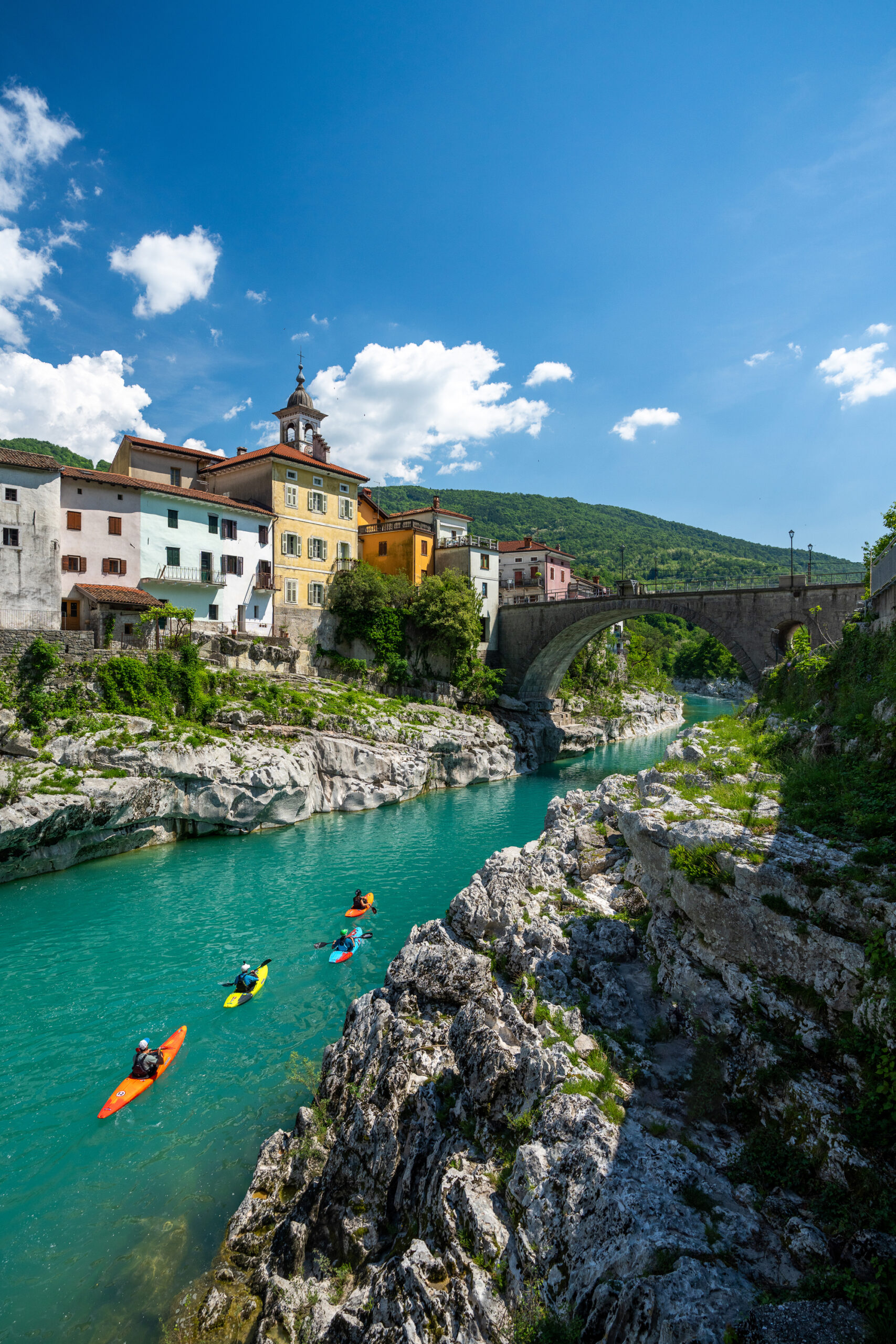
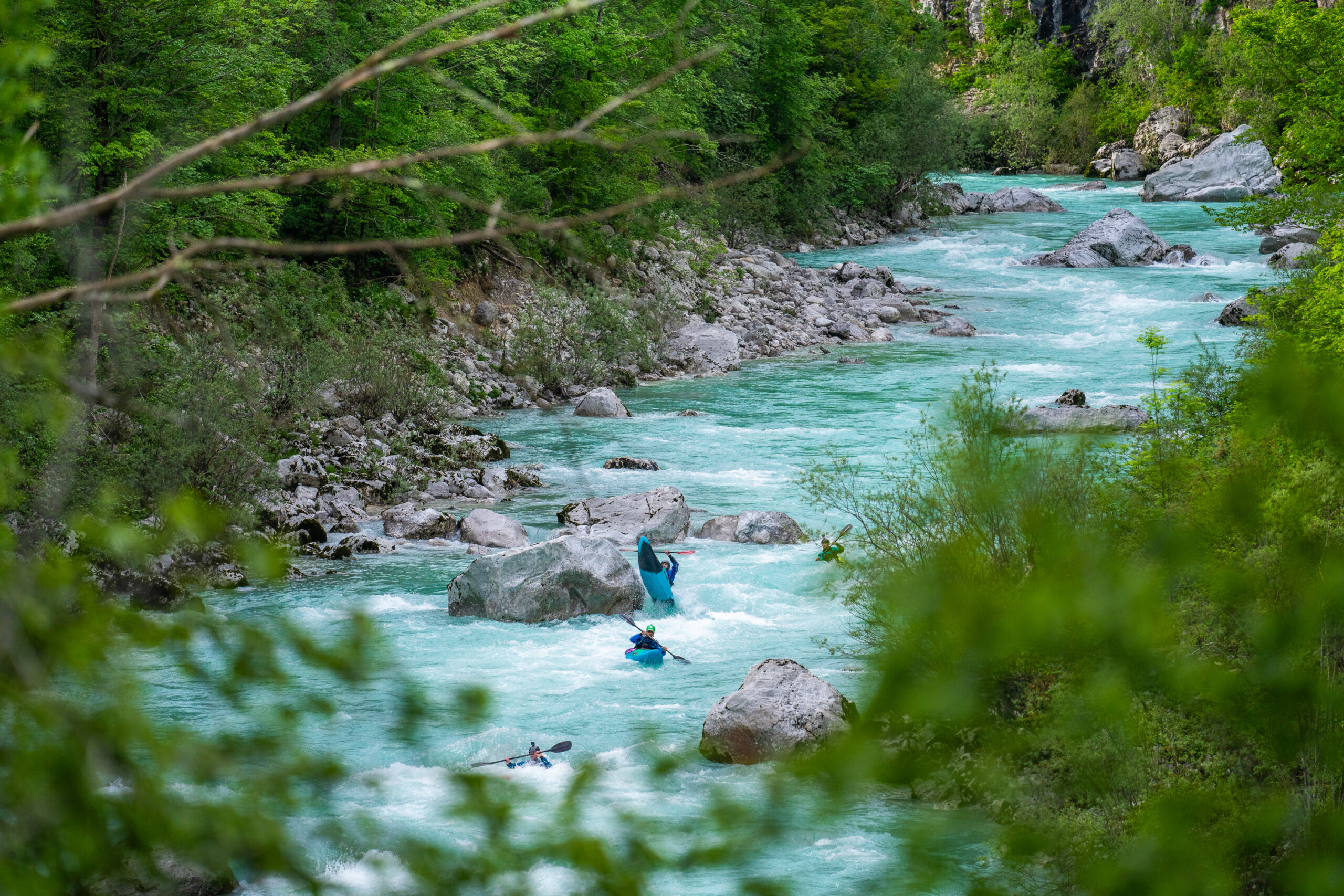
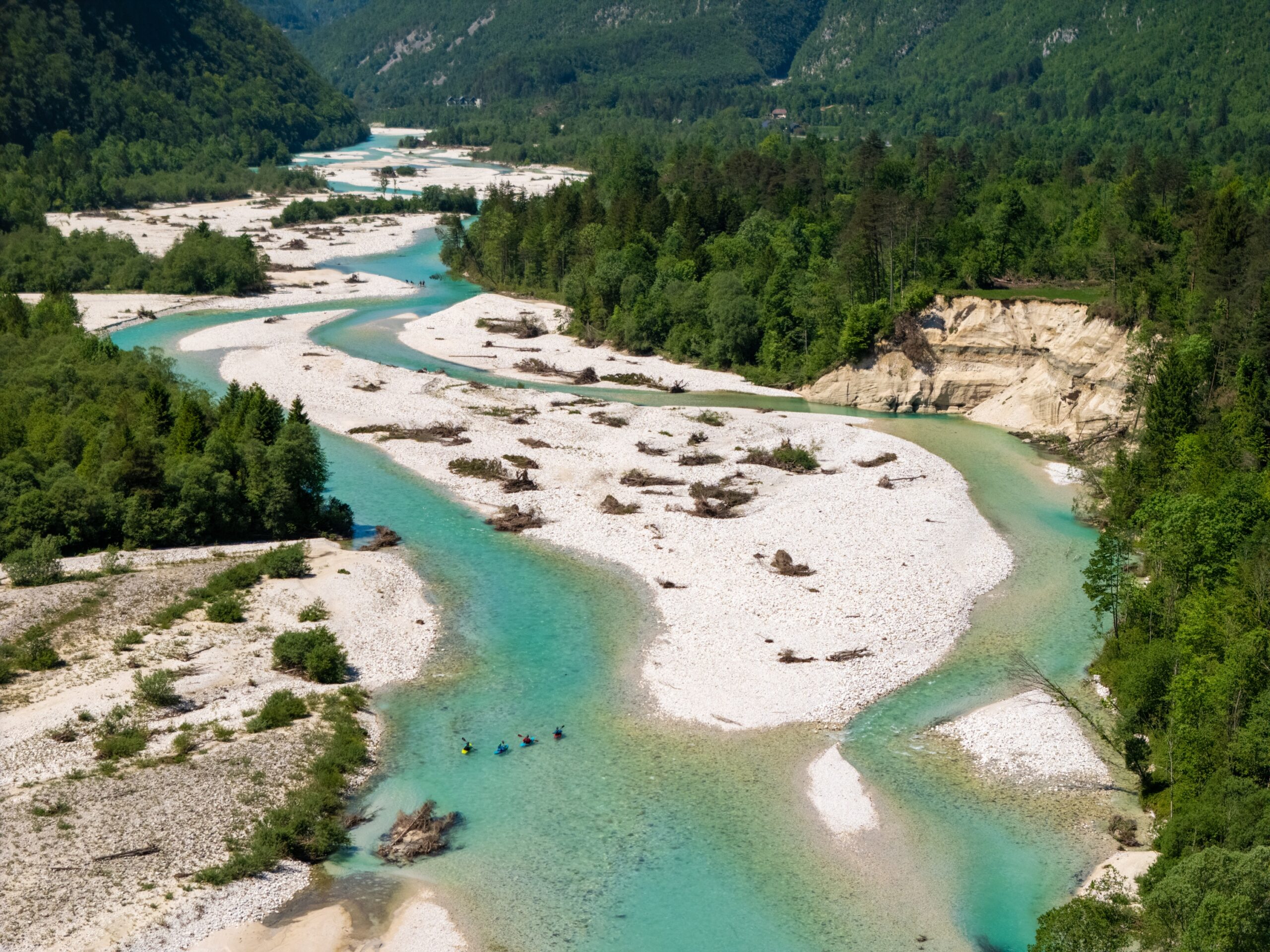
The Soča may be a kind of supermodel in the world of whitewater kayaking – her aquamarine, gin-clear water and sexy rapids, with something for every ability. But if you take the time – about six days – you discover that there is more to her. From her humble beginnings as a trickle high in the Julian Alps to the expansive embrace of the Adriatic Sea, the Soča invites you to get to know her. And Balkan River Defence’s new paddling guidebook can help.
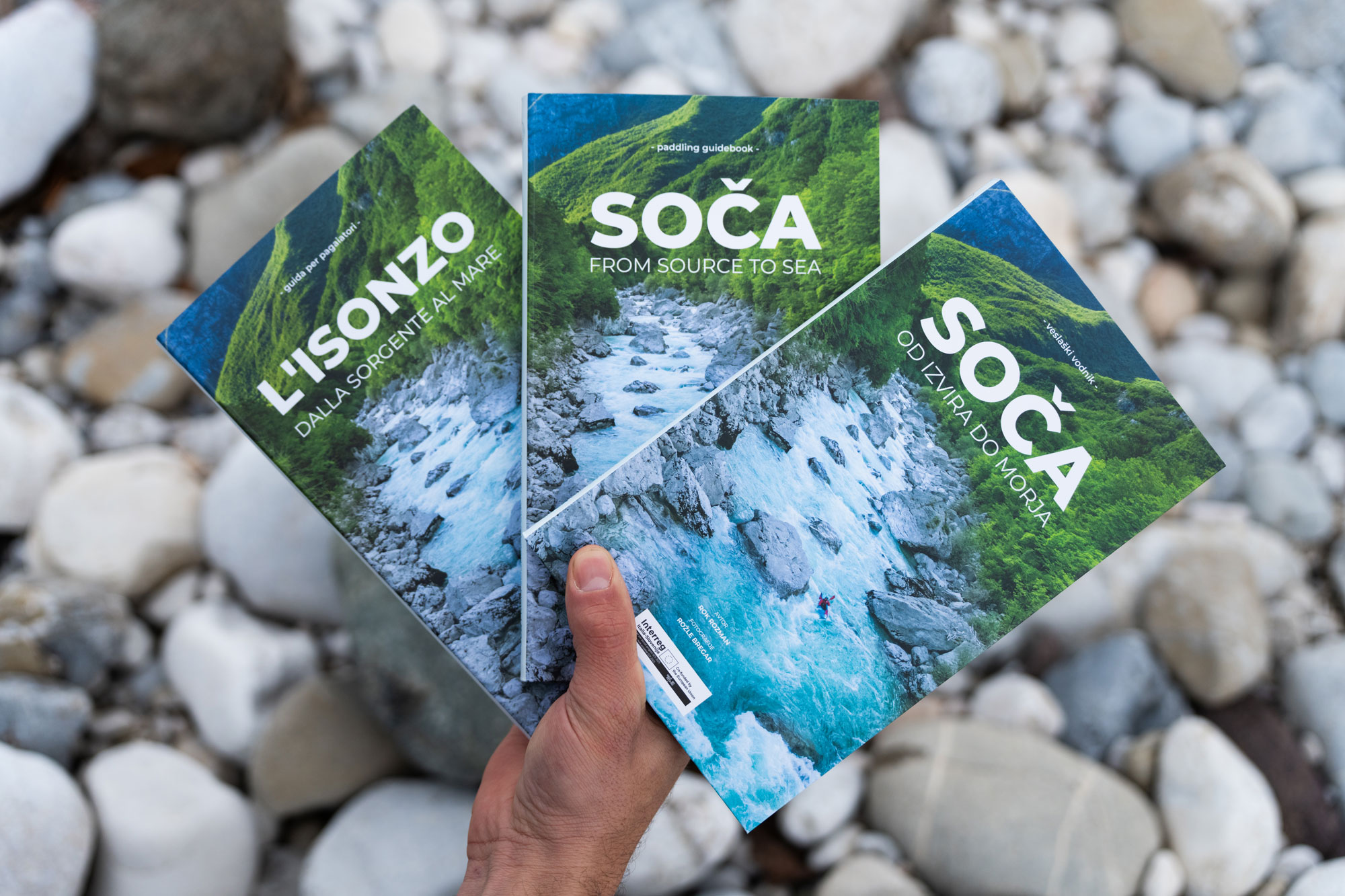
Soča From Source to Sea – Paddling Guidebookwas officially launched in December at the Bovec Mountain Film Festival (BOFF) in Slovenia.
Paddlers and non-paddlers alike have already cracked the cover of copies in English, Italian, and Slovenian. A sneak peek of the guidebook can be seen here, and it can be purchased at the following links:
The guidebook doesn’t ignore the recent controversy on the ticket prices for the use of the Soča. It addresses the history and current situation of the issue and is already generating discussion amongst decision-makers. While working to find a solution, the team behind the book is encouraging paddlers to use this situation as a chance to explore different sections of the river – free to use and free from controversy, which provides the peace and enjoyment we seek while paddling, and also sends a loud message to decision makers that kayakers disagree with the decree and ticket prices and that the Soča Valley is still a place for paddlers.
This guidebook was written for all paddlers: whitewater kayakers, canoeists, packrafters, stand-up paddleboarders, rafters and minirafters. Whether you’re new to paddling or a seasoned expert, the guidebook provides the knowledge needed to explore the Soča safely and respectfully and provides insights into some of the Soča’s secrets while leaving you the space to discover some yourself.
* * *
About the Guidebook
Written by BRD founder Rok Rozman and featuring photos by Rožle Bregar, this is the first paddling guidebook to cover the Soča River’s entire course. Published by the Leeway Collective Institute, the 216-page book combines paddling logistics with a deep dive into the river’s natural and cultural history.
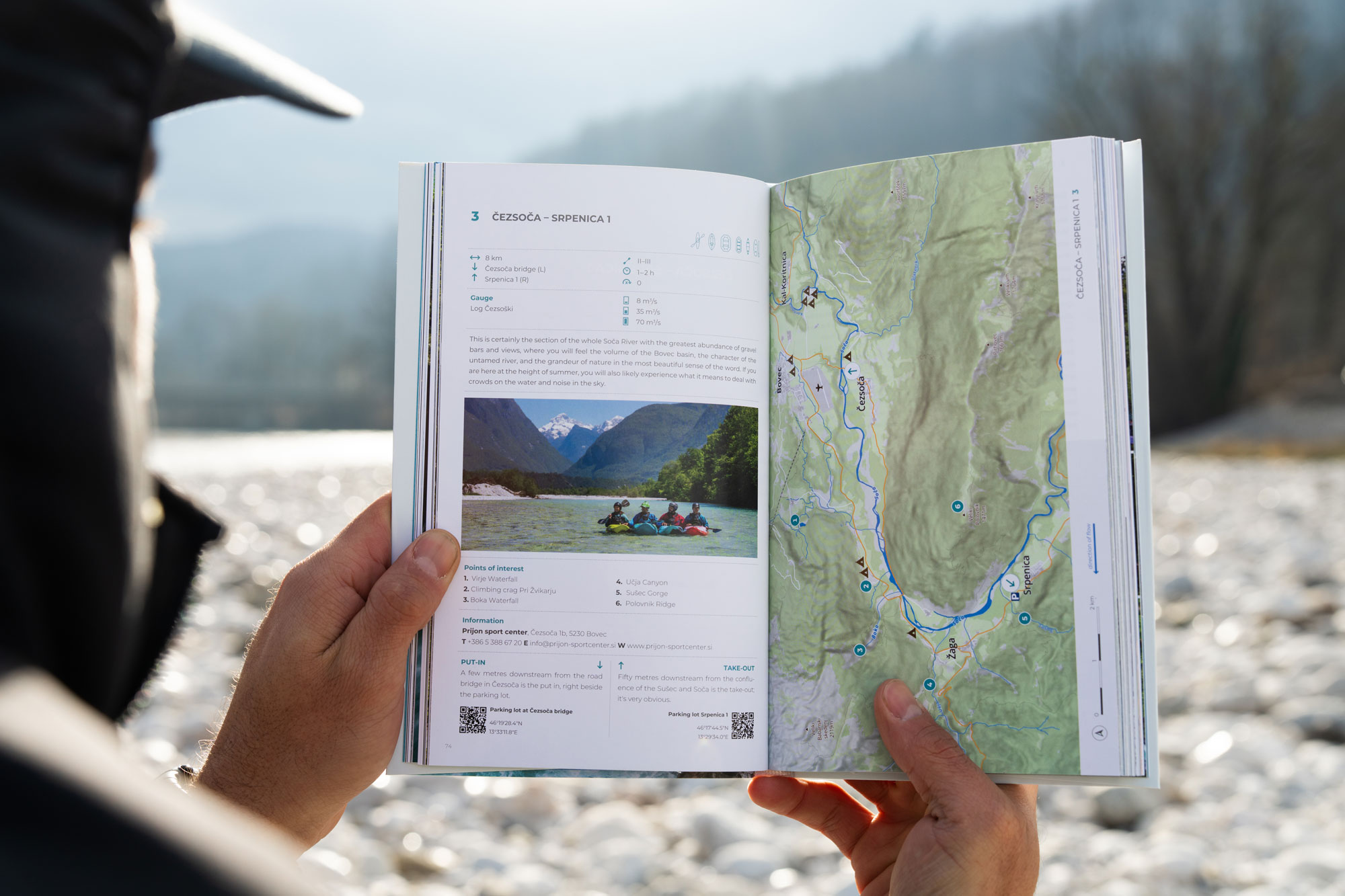
The guide includes maps for each of the 14 paddling stages and one hiking stage, details on accommodation and dining, and non-paddling activities. Its compact format (25 cm x 15 cm) makes it easy to bring along on the river, yet big enough to sit on your coffee table.
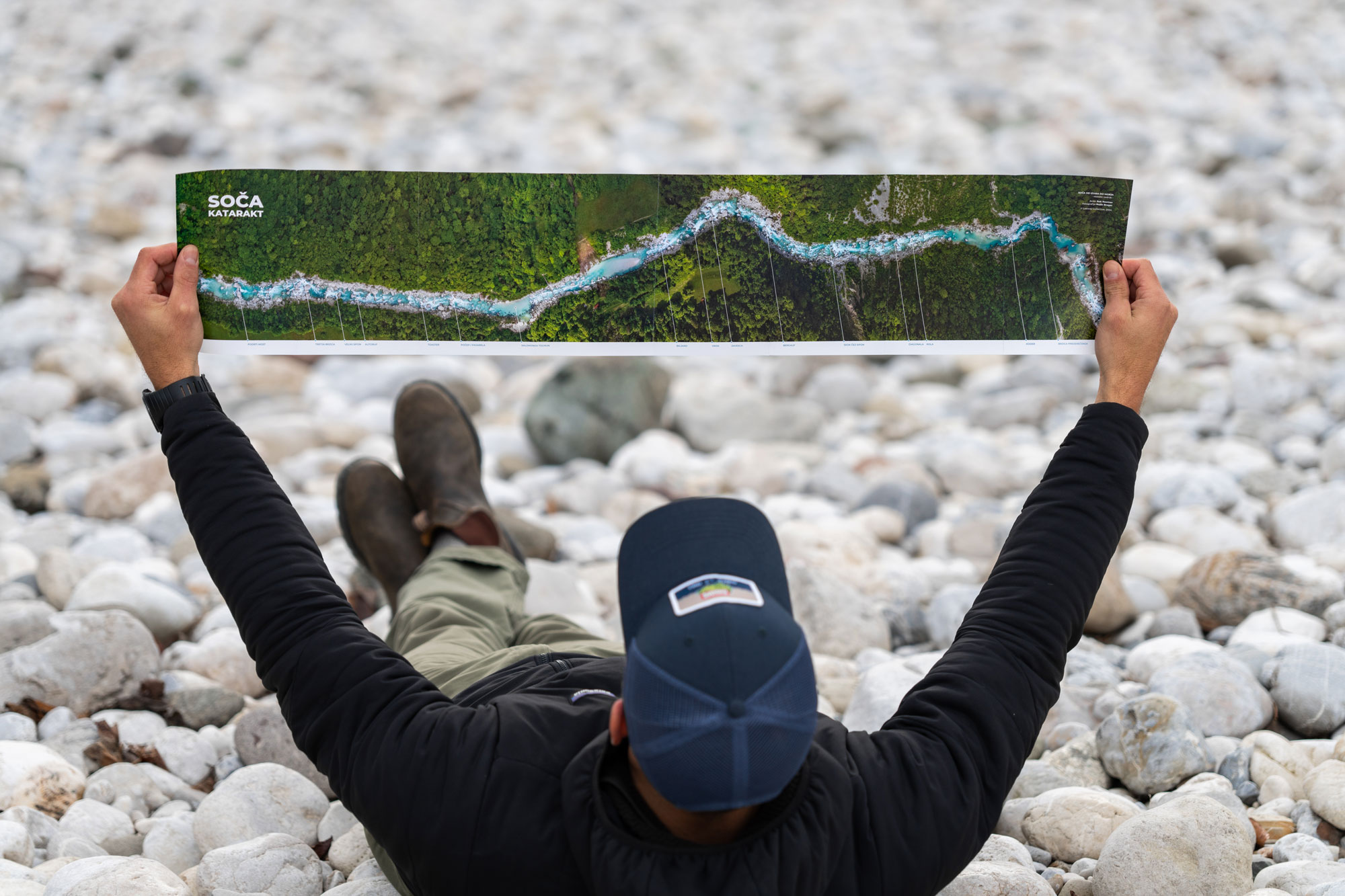
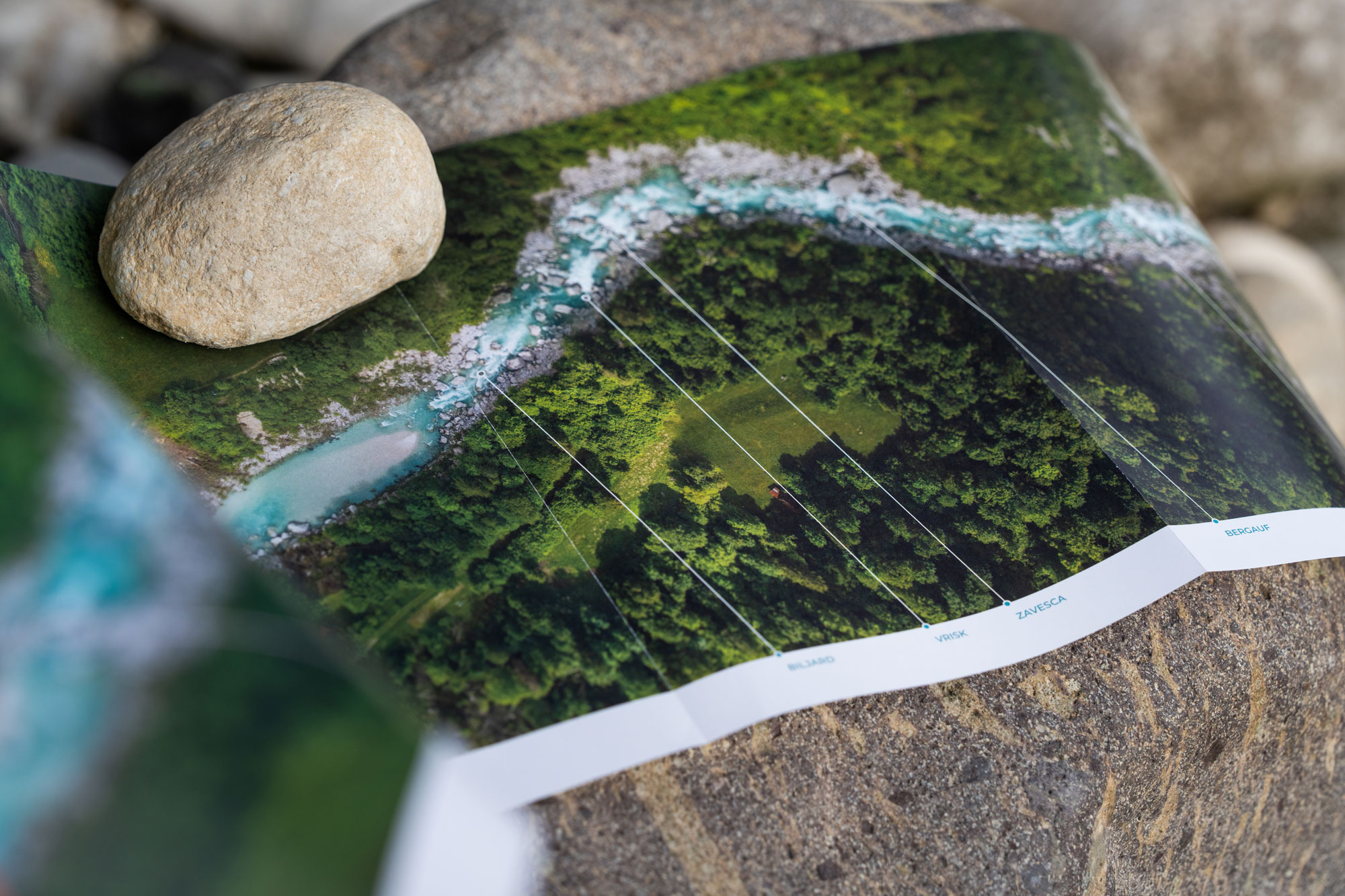
It also features a stunning 100 cm folding map of the Katarakt, the river’s most challenging whitewater section, tucked neatly into the back cover.
The first half of the guidebook is a monograph exploring the Soča’s flora, fauna, geology, and history, while the second half provides practical paddling information in an easily digestible format of: double page photo introduction; paddling details and stats page (length of stage, class, water level info, time needed etc.; a reference map including non-paddling points of interest, campsites, restaurants, rapid names, hazards etc.; and a short write up on the section that reads like a story. This is the kind of book you could hand to your grandma to read cover to cover, even if she’s not a paddler.
* * *
Motivations Behind the Guidebook
Creating a guidebook for an iconic river like the Soča brings great responsibility. The team behind it aimed to avoid contributing to over-tourism or environmental harm by focusing on four main goals:
Dispersing Paddling Traffic
The Soča’s popularity often results in overcrowding, particularly between the towns of Bovec and Tolmin, which puts pressure on the river’s ecosystem. By encouraging exploration of the entire river, from its Slovenian alpine source to its Italian Adriatic mouth, the guidebook highlights lesser-known sections and relieves pressure on overused areas.
Understanding Healthy River Systems
Paddling the Soča from source to sea offers a chance to learn through experience about the ecological importance and function of rivers. The Soča provides fresh water, wildlife habitats, and recreation opportunities. It moves material, filters water and, yes, generates electricity. The journey also divulges the impact of dams, hydropeaking, and irrigation, allowing the paddler to come to their own conclusions based on what they have seen and experienced, and not based on words in a book (although the words in the guidebook do provide some background information on how the water of the Soča is used today).
Promoting Responsible River Use
The guidebook includes tips for minimizing environmental impact, such as respecting fish spawning seasons and avoiding bird nesting areas. By understanding the patterns of the river’s natural inhabitants, the guidebook aims to inspire paddlers to minimize their impacts while not hindering the level of enjoyment.
Maximizing Enjoyment on the Water
After all, that is the reason we climb into small plastic tubs and use sticks with spoons at the end to navigate rivers, right?
* * *
Guidebook Highlights
Introductory Chapters
The guidebook begins with an author’s note and a poem, setting a reflective tone. It then delves into Soča’s geology, hydrology, cultural history, and threats from hydroelectric projects and commercial agriculture. It provides paddling info like transportation options (including train shuttle), safety tips, and a glossary of river-running terms. Another section explores Soča’s flora and fauna, introducing over 70 species of birds, fish, mammals, and plants. Readers learn how to minimize their impact, such as identifying bird nesting areas and understanding fish spawning seasons. There’s even a chapter on fishing, with advice on respectful practices and obtaining licenses.
Paddling Stages
The second half of the guidebook outlines 14 paddling stages and one hiking stage. Each stage includes put-in and take-out locations (with QR codes for Google Maps), distance, difficulty level, approximate paddling time, and suitable vessels. Details on minimum, maximum, and optimal water levels are provided, along with maps highlighting campgrounds, restaurants, rapids, portage routes, and danger zones. The stages range from beginner-friendly sections to intermediate and advanced whitewater runs, ensuring options for paddlers of all skill levels.
* * *
The Soča Paddling Guidebook invites paddlers to explore the river’s 138 km journey in sections or as a single, “epic” source-to-sea adventure. Stages are designed for half-day trips, allowing time to enjoy the surrounding attractions. (Or sit beside the river with a beverage and relax.)
The guidebook is about more than whitewater. It connects paddlers with the Soča’s hidden gems, local communities, and natural beauty. It encourages paddlers to discover not just the river’s iconic stretches but also its lesser-known charms. The Soča is more than a river; she’s a storyteller, carrying the marks of history and nature’s power. This guidebook celebrates her entirety, inspiring paddlers to explore but also to cherish and protect rivers everywhere.
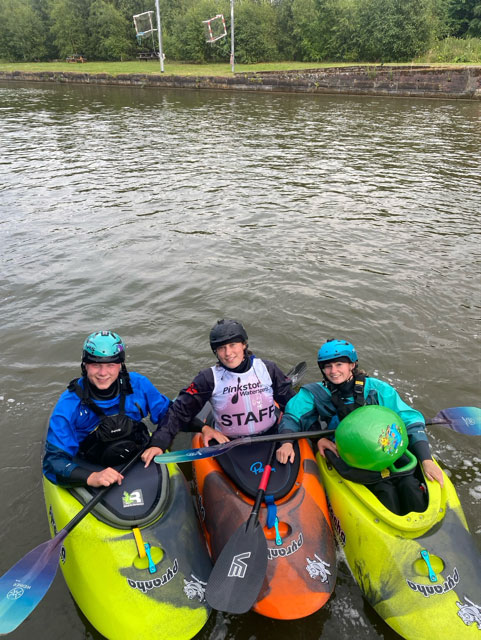
April 29th, 2024 – I borrowed Niamh’s playboat for a park-and-play session at Pinkston Water Sports. After wobbling around in the features, I was quickly convinced to try a front loop. I squared up, paddled into the feature, and soared into the air—arms raised high above my head! I was flying! I was sure I’d land this on my first try and blow everyone away. A playboating god in the making… or not quite. In reality, my loop quickly evolved into a full-contact introduction to the water. Oh yes, the first of many face-flops to come.
The front loop felt like a pivotal move in playboating—one you can’t avoid if you’re thinking about calling yourself a playboater. It’s like the kayaking equivalent of learning to walk before you can run. The thing is, I felt like I had already been trying to run.
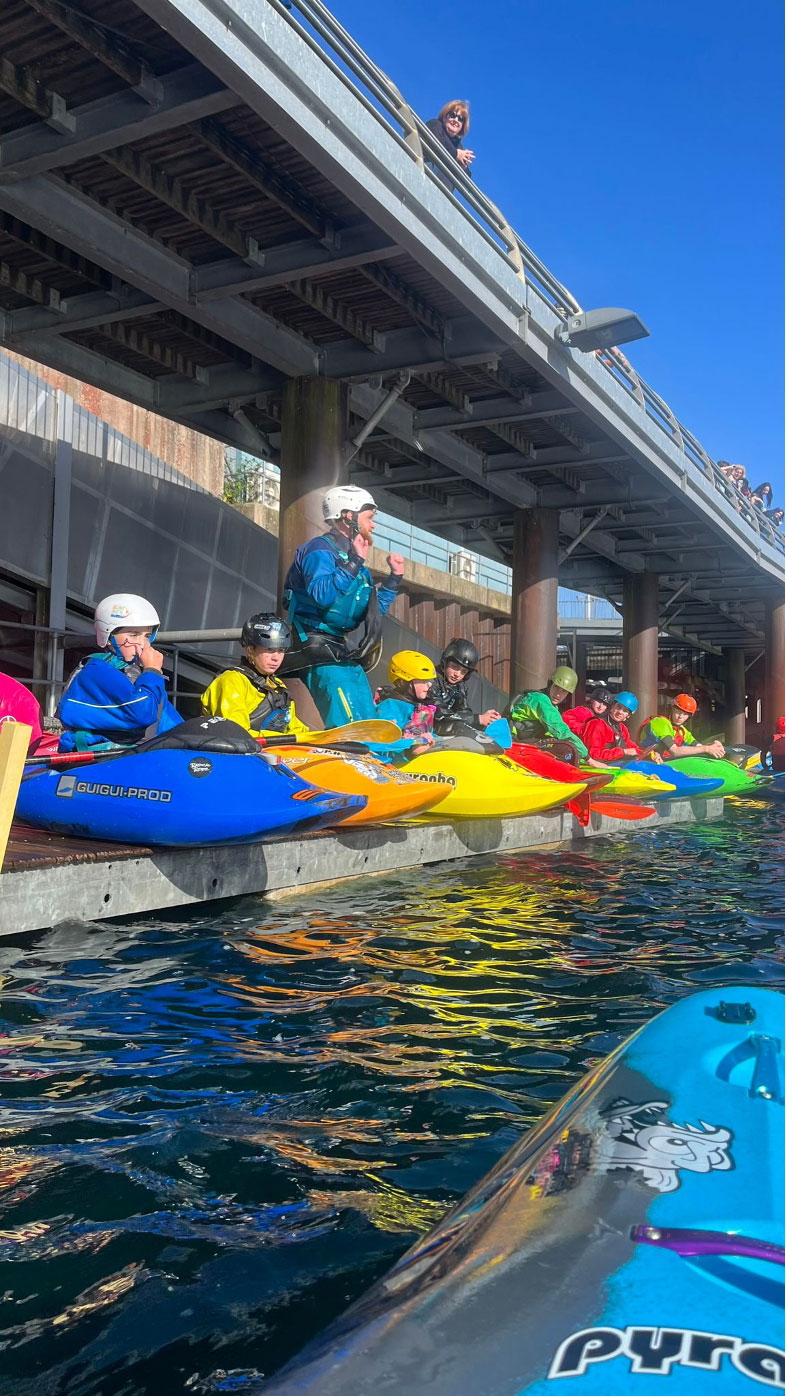
In October 2023, I attended my first Park Jam as a team paddler for Pyranha. It was an incredible experience—being surrounded by the likes of Bren Orton, Heidi Walsh, and the entire Pyranha and Palm team. But in that presence, I couldn’t help but feel like a bit of an imposter. Though I’m sure my love and passion for the sport got me there [Editor’s Note: Rowan is being extremely modest about her skills here, but her passion for the sport, warm nature, and willingness to get stuck in and help out certainly played a part, too!], I couldn’t shake the feeling that there was a standard I should be at—especially when Bren spent a large part of each session teaching the kids how to loop.
Bren at Park Jam 2023 about to teach like seven kids how to loop. This is when I realised that maybe it would be worth a go!
I had an amazing time on tour, but I knew deep down that if I was invited back the following year, I wanted to be able to contribute more. That meant stepping up my game. So, as the water warmed up and I spent more time at the artificial whitewater course at Pinkston, things started to align. There was no excuse anymore—not if I wanted to level up and bring more to the table. My journey to mastering the front loop was officially about to begin.
In this blog, I’ll take you through the physical and mental journey I went through to learn the loop. A journey filled with frustration, laughter, tears, supportive friends, eddy tantrums, and a lot of determination. Five months of falling on my face (literally), sort of determination.
Failing, Learning, and Learning to Fail
I’ve always been sporty and enjoyed a challenge, but this was something else.
Turning Point: Finding My Flow
I’d say mindset and maybe Nick Troutman’s “How to Loop” video were key to my success. It’s interesting how much the way we talk to ourselves can affect our performance. In the early stages of my mission, I referred to it as “falling-on-my-face practice.” I was having a lot of fun, but not once did I turn up to a session thinking, “I could actually do this today.”
Soon enough, continually falling on my face while my friends had their breakthrough moments started to get a little frustrating. I was committed, never missing a session, but there were no results. I took a small break and tried different skills, but the loop haunted me, and I refused to be defeated.
During my next stint, I went into every session saying, “Today’s the day.” or “I’m going to loop today.” Positive self-talk is great, but I realized that, at a glance, this seems like the right attitude, yet the words held no weight because there was no self-belief behind them. Somewhere around this point, it really started feeling like quitting time. However, I had already been documenting the process on Instagram, and I couldn’t let myself down like that.
In May, the kayaking community received the tragic news of our good friend Bren’s passing. Kayaking lost its appeal to me for a while, though I knew this would never be the attitude by which Bren would want people to remember him. I received a lot of advice from kind people online through documenting my journey, but Bren had always shown interest in my progress, offering some silly but wise words of wisdom.
“The most important part is to lean all the way back to finish the loop.”
Bren Orton
I got back in my playboat with the goal of achieving my loop before Bren’s Park Jam tour as my own little way of honoring him.
I got back to work and continued to practice twice—or more—each week. Just whenever I could! I fell back in love with the sport. Playboating allowed me to surround myself with an extremely supportive and creative group of paddlers multiple times a week. Everyone was pushing themselves to learn tricks and just having a good time while doing so.
My go-to hype team minus Craig. These guys never let me down!
However, I still had absolutely no idea how to “kick with my heels” when I physically couldn’t feel my feet in the boat. I continued through the summer, still learning and improving but never quite bringing that loop around. Womp womp womp.
September came around, and I was getting a little stressed as the deadline I had set for myself was fast approaching. My crew and I headed to our local river, the Cart, for some downriver freestyle fun. Upon arrival, the river was much higher than we had done it before, but I was so excited to get on the water.
After a couple of attempts at running the 10-foot drop, I decided I’d like to try a Free Wheel off it (another trick I’d been working on). What followed was possibly the worst Free Wheel attempt known to man. I landed right in the seam sideways. This quickly escalated into the scariest moment of my life—the first-ever “Oh, I’ve really messed this up” moment in my kayaking journey. After a minute of being body recirculated, I couldn’t think of anything worse than getting back in a boat.
A week later, and a week closer to my deadline, I got back in my playboat at Pinkston. I spent the session feeling tense. It felt like all the progress I had made in my loop was lost. But I returned the next day, surrounded by my little freestyle community, and had a lovely session full of laughter and, of course, falling on my face.
The Breakthrough: Two Weeks Before Park Jam
Two weeks out from Park Jam 2024, I still wasn’t looping. Five months of practice and dedication, yet here I was. I had gotten all my tantrums out of the way in the previous weeks, but I needed to try something different. I had the water all to myself and threw attempt after attempt. One attempt felt different—very promising—but I had no video to verify it.
The next day, before getting on the water, I sat in my van and watched Nick Troutman’s “How to Loop” video on YouTube. He mentioned something about moving your body in a whipping motion to bring your torso back to the back of the boat. That was all I thought about.
I got on the water again. This time, Kyle and Craig were out there with me. I watched them throw some big loops. It was my turn for my first attempt of the day. I paddled into the feature, focusing only on that whipping motion. I plugged into the feature, threw my arms high in the air, then brought them back into the boat, opening back up—whipping my body back.
Something amazing happened: I could hear the joyful whoops and cheers from my friends. Which meant… I wasn’t upside down. I hadn’t face-planted.
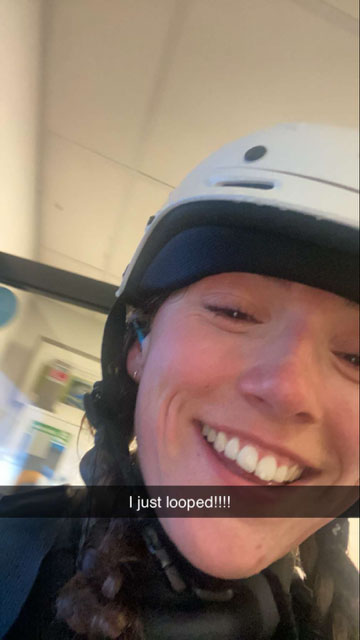
The photo I sent to all of my friends immediately after my first loop… a happy girl.
I went again. It happened again… and again… and again. Two weeks out, and I could loop. I don’t think I’ve ever been prouder of myself or more grateful for my sport. Twice in my journey, learning to loop had been the thing that kept me in the sport. I owe a lot to my journey, and I’ve learned so much about myself and the way I learn.
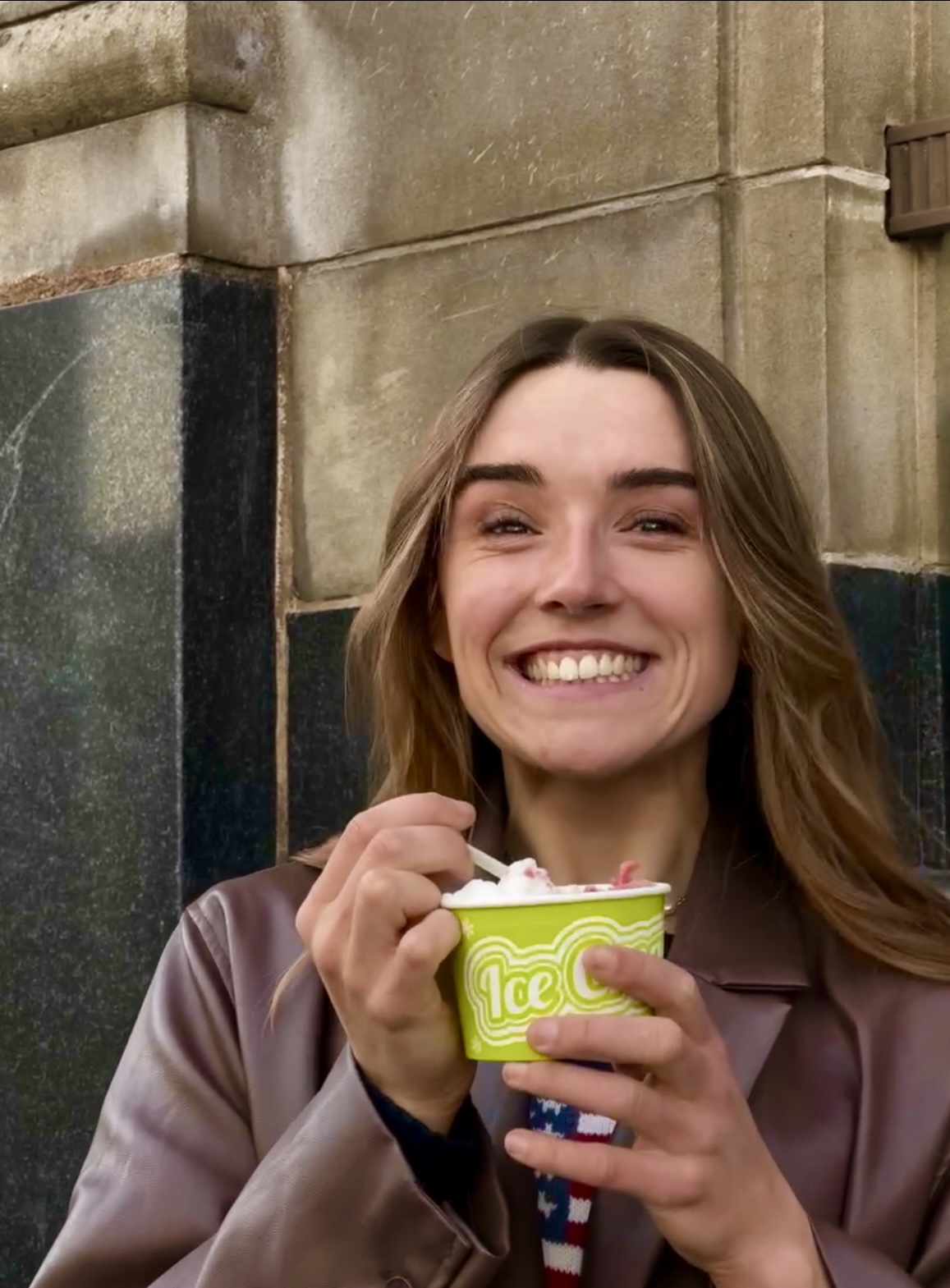
A week later, Taylor and I went for ice cream. Earlier that summer, Taylor had learned to loop, and we celebrated her milestone with a scoop of ice cream for her loop. This time, it was my scoop for my loop. Ice cream is a great motivator!
Me and my scoop for my loop!
Tips for Aspiring Front Loopers
I think the advice I’d give my past self would be to watch Nick’s videos sooner. In all seriousness, though, it’s important to always make sure it’s fun. If a coaching cue doesn’t make sense to you, look for one that does. I’m not saying that if I had watched the video sooner, I would’ve learned faster, but it might have helped! It’s also important to remember that the only limits on what our bodies can do are the limits we set for ourselves. Really believing in your ability is so important.
The Future: What’s Next After the Front Loop?
What’s on the horizon? Good question! I have a couple of tricks in mind. I feel like since I kind of just skipped to learning the loop before anything else, I probably have some catching up to do with other tricks. So maybe something like a cartwheel, or maybe something bigger—I’m not super set yet. Still having a lot of fun with the loop though. I’m excited to get into the new Pyranha x GuiGui-Prod Helectron Small and see how that changes my playboating experience.
Conclusion: Embracing the Journey
Reflecting on my front-loop journey, it’s clear that the process was never just about mastering a trick. It was about pushing through frustration, learning from every fall, and discovering the power of persistence. There were days when quitting felt like the easiest option, but in the end, it was the support of the kayaking community, the lessons learned from my failures, and the belief in my own potential that kept me moving forward.
Park Jam 2024 – A Rowan who could loop in her noble steed.
The loop, for me, was never just a goal—it was a symbol of growth, both as a paddler and as a person. It taught me that success isn’t defined by the number of times we land something, but by our willingness to keep trying and learning from every experience. As I look ahead to the next challenge, I’m reminded that there’s always room to grow, and the adventure of learning never truly ends.
Quotes That Just Made Sense
“The most important part is to lean all the way back to finish the loop.”
Bren Orton
Bren had become a good friend since taking part in the Park Jam tour back in 2023, though I had looked up to him long before then. We kept in touch often, and he would occasionally offer a bit of advice toward my loop, but he mainly expressed the importance of making sure that it’s fun and that I’m doing it because it’s fun. Even after his passing, I found that focusing on the loop helped me rediscover my love for kayaking, especially during tough and unsettling times. It became my way of returning to what I love, helping me find the fun and motivation I needed to keep going.
“Lie back more so than kicking the heels. Get the back of your BA to touch the back of your boat.”
Aoife Hanrahan
This one was super helpful. This was in response to an Instagram story expressing that I had no idea how to kick my heels. Thank god for Aoife! Though we only met briefly, she took the time to send me detailed voice notes and videos, showing a level of care and dedication that was truly humbling. Having such experienced and thoughtful people in my journey, even from a distance, made all the difference.
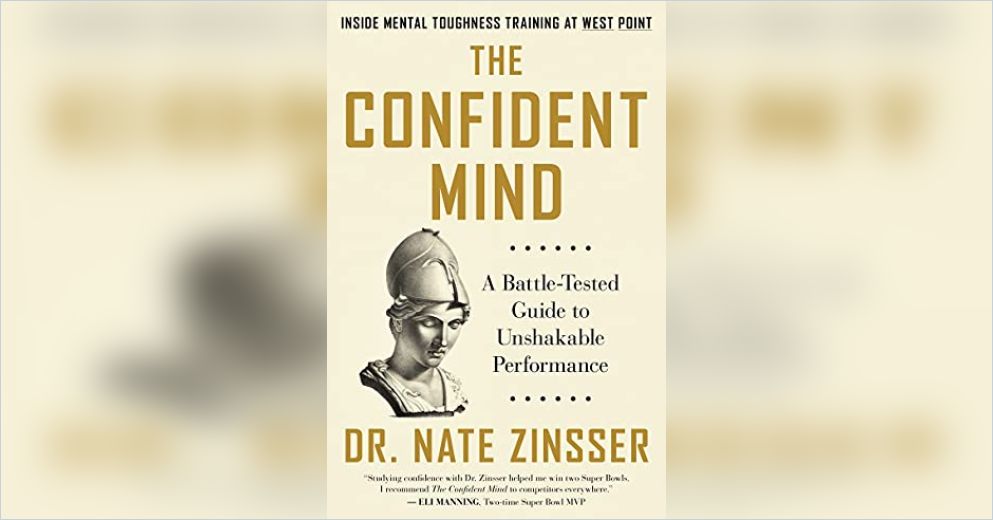
Another super helpful resource during this time—especially as I prepared for my trip to Chile—was The Confident Mind by Dr. Nate Zinsser. This book was suggested to me by my boyfriend when I was feeling particularly low in my confidence and struggling with my abilities. If you’re anyone in any sport dealing with confidence issues, I highly recommend it. The book gave me practical strategies to understand and manage my nervousness, allowing me to focus more on the tasks at hand rather than getting lost in self-doubt. It really helped me break down the mental barriers that were holding me back, and I can’t overstate how crucial it was in helping me push through my challenges.
…and of course, you can visit my Instagram to see the real-time journey of me learning to loop: @rowanandrew_
Pyranha’s quest to make the best kayaks on the market started many years ago. 54 years ago, to be exact. Over this time, both Pyranha individually and the industry as a whole have faced many challenges; our small team of Enthusiasts has overcome these by simply following our passion, and producing paddler-led, paddler-focused designs, amongst which we’re comfortable in saying we’ve all found something that’s left us out on the water beaming from ear to ear at one point or another.
During the pandemic, we saw the outdoor industry boom, with participation increasing across outdoor sports of all kinds as people sought an escape beyond their own four walls and their local supermarket. Many others have found that same enjoyment we know well and become as hopelessly addicted to it as we are, but despite our hopes, it was clear the levels of participation of the post-pandemic boom were not sustainable, and neither were the resultant market demand or corresponding levels of production.
2025 came as expected, with an increase in political volatility, global crises, and economic pressures; the outdoor industry is not immune to these. Costs for all of our customers and ourselves have increased significantly these last few years, compounded by unexpectedly increased taxation and labour costs. In addition, costs are also rising universally across our suppliers, including significant increases to energy rates and rent.
There is little margin for ourselves or the specialist retailers we work with to absorb these cost increases, and we have, therefore, been forced into a position where we must now increase prices beyond our initial expectations for the year. Nonetheless, we are working hard to keep the impact of this as low as possible and expect it to be around a maximum of 7%. We can assure you that we will not profit from this increase; it will simply enable us to maintain our business vision moving forward and continue to innovate and provide the very best kayaks we can.
We aim to implement these price increases on March 31st, and very much hope that this advance notice will help those looking for a canoe or kayak in the near future to strike while the iron is hot, save themselves some money, and help support our network of specialist retailers while securing the canoe or kayak they’ve been dreaming of in the process.
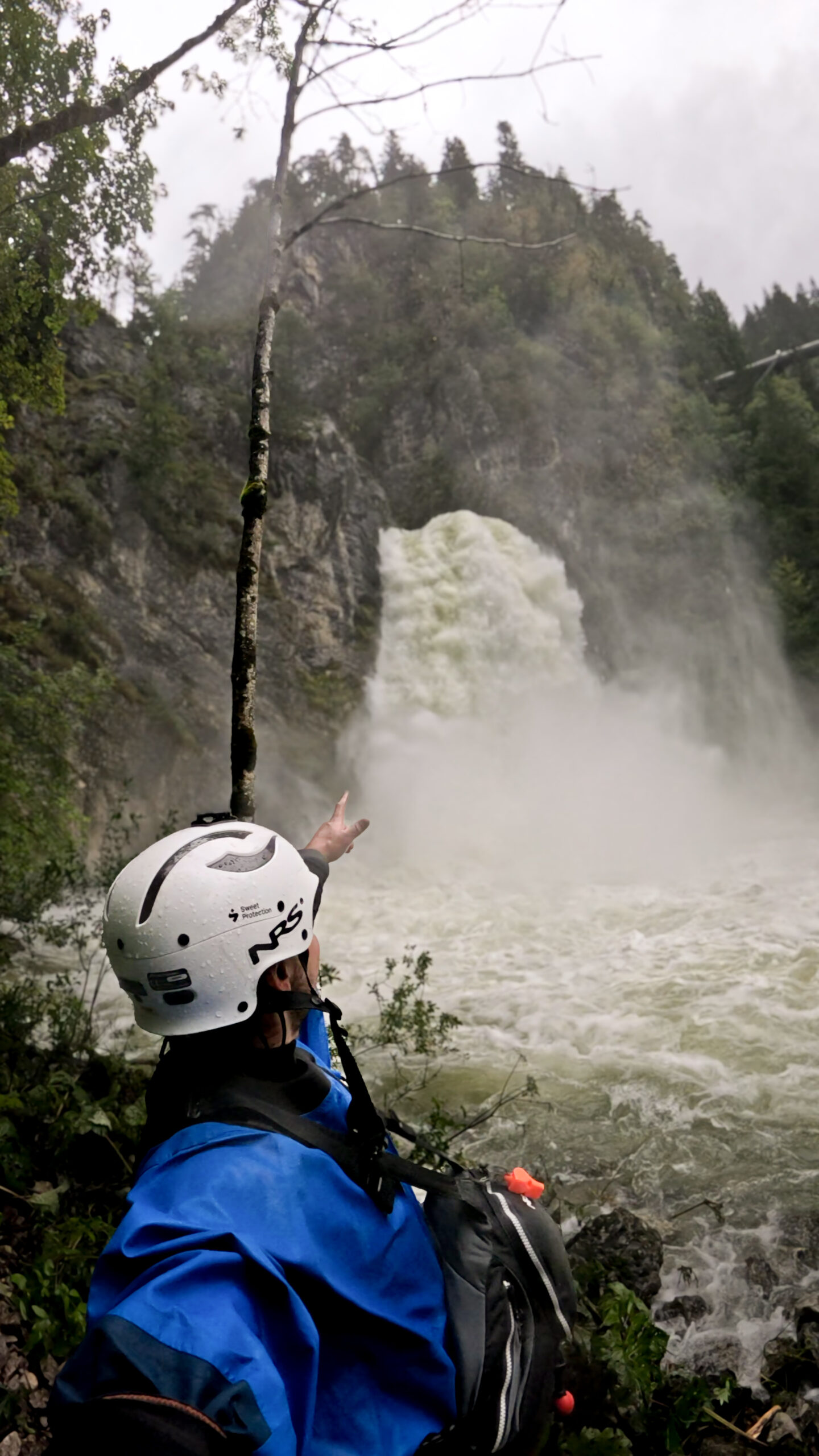
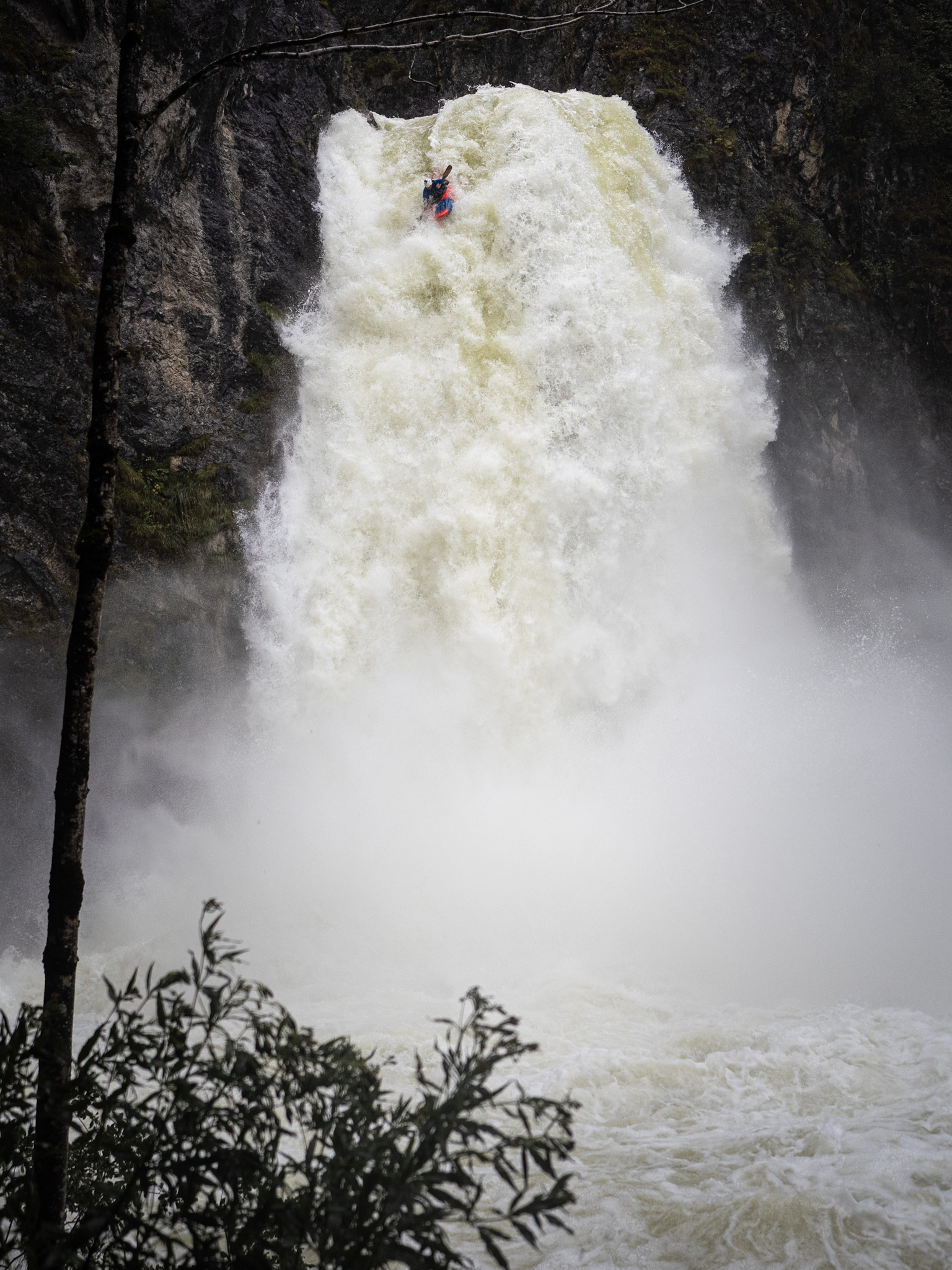
Austria is renowned for world-class whitewater kayaking and hosting the Extreme Kayaking World Championships. However, big waterfall kayaking is rare, with the Salza waterfall being a notable exception.
In 2014, Lukas Strobl made the first descent of the 83ft Salza waterfall with a very memorable line as he hit the centre-line kicker, sending him flying; luckily, he walked away with only bruised ribs. A few months later, Daniel Egger completed a cleaner, second descent. Due to a dam upstream, the waterfall only runs after heavy rainfall and has been kayakable just five times in the past decade, with no attempts until autumn 2024.
I’d been seeking an 80ft drop for a while and remembered the Salza waterfall from watching a video of Lukas and Daniel back in 2021, but as it needed a huge amount of rainfall and I wasn’t sure where it was exactly, I guess it never really crossed my mind to run it. When I saw the heavy rain forecast for Austria ahead of Lofer Rodeo, it sparked the notion that there was a possibility the elusive Salza waterfall would run! I started reaching out to friends to gather information on the waterfall’s conditions. After some back-and-forth, I found the location and learned that it was almost impossible to know if the dam would release without checking in person.
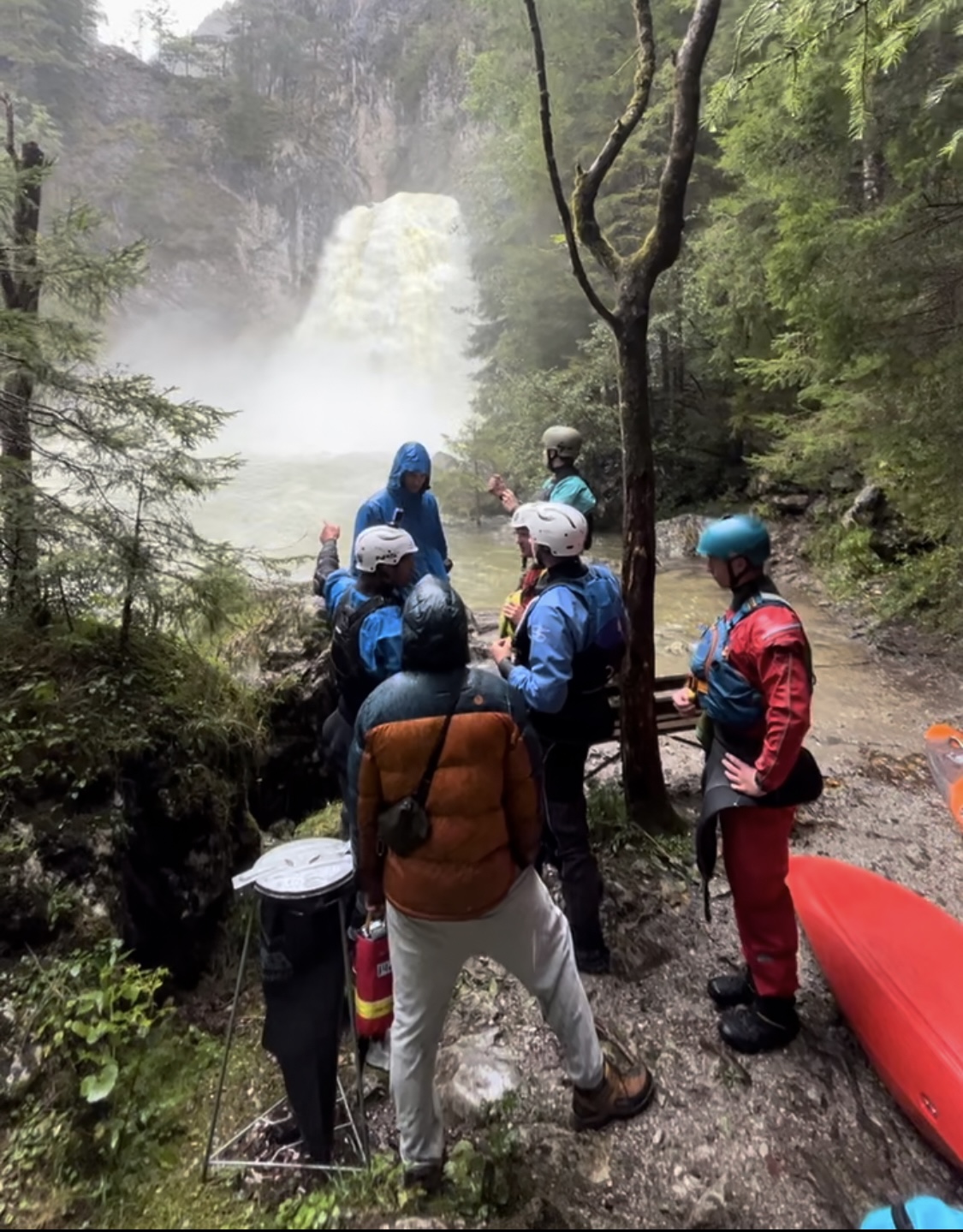
Andy Kettlewell and I decided to head to Lofer Rodeo first, enjoying a high-water lap down Devil’s Gorge on the Saalach. Motivated by this, we made the plan to drive early the next day and see for ourselves whether or not the drop was flowing. After a road closure due to snow, we found a detour and arrived at the dam, where workers confirmed that the heavy rain had caused the dam to overflow and that it would be releasing for the next two days. I was stoked, but I’m not sure my excitement was matched by the three workers standing in the pouring rain…
Shortly after arriving, I got a call from Daniel Egger, who offered to guide us to the waterfall and gave us some useful information regarding getting to the top and the best places to get in my boat. The next challenge was to rally a crew for safety and filming; as all my mates had just spent the last three days in the cold and wet weather, it was hard to convince them to spend another two hours out there to watch me kayaking for thirty seconds. Luckily, there was a group of boys heading over this way who agreed to help us out with the safety and media.
While we waited for the crew to arrive, Andy and I headed up to the drop for another look, this time taking our kayaks so we could cross the river and hike up the path to the lip of the waterfall. Once we got there, we realised how much more water there was in the river compared to previous descents, that the line looked pushier, and the options were limited on places to launch from. In normal conditions, this gorge is used for canyoning, so there was a small, steep path leading to the river and, at the bottom, a small pothole only 20 meters from the lip, which would have to make do as a launch spot.
Once the crew arrived, I briefed them on the plan, taking them through safety scenarios and what role everyone would play. Along with making sure everyone was in the right spot, we had to make sure that there would be a clear line of communication between me and the rest of the team to make sure that everyone was ready before I paddled the drop.
Another hour went by, running through the line in my head and discussing the best option for a successful descent with the crew. The trickiest part was navigating the lead-in, where I had to avoid getting pushed to the middle, which could lead to a shallow landing or a huge boof off the kicker, similar to the first descent. After visualising for a short while and making sure I was confident on the line, I started to head down to the river to get in my boat. Once I was in, it was a waiting game as we had to make sure everyone was ready; it might have only been a minute, but it felt much longer, and then I got the signal to go.
Photo by Jakub Sedivy
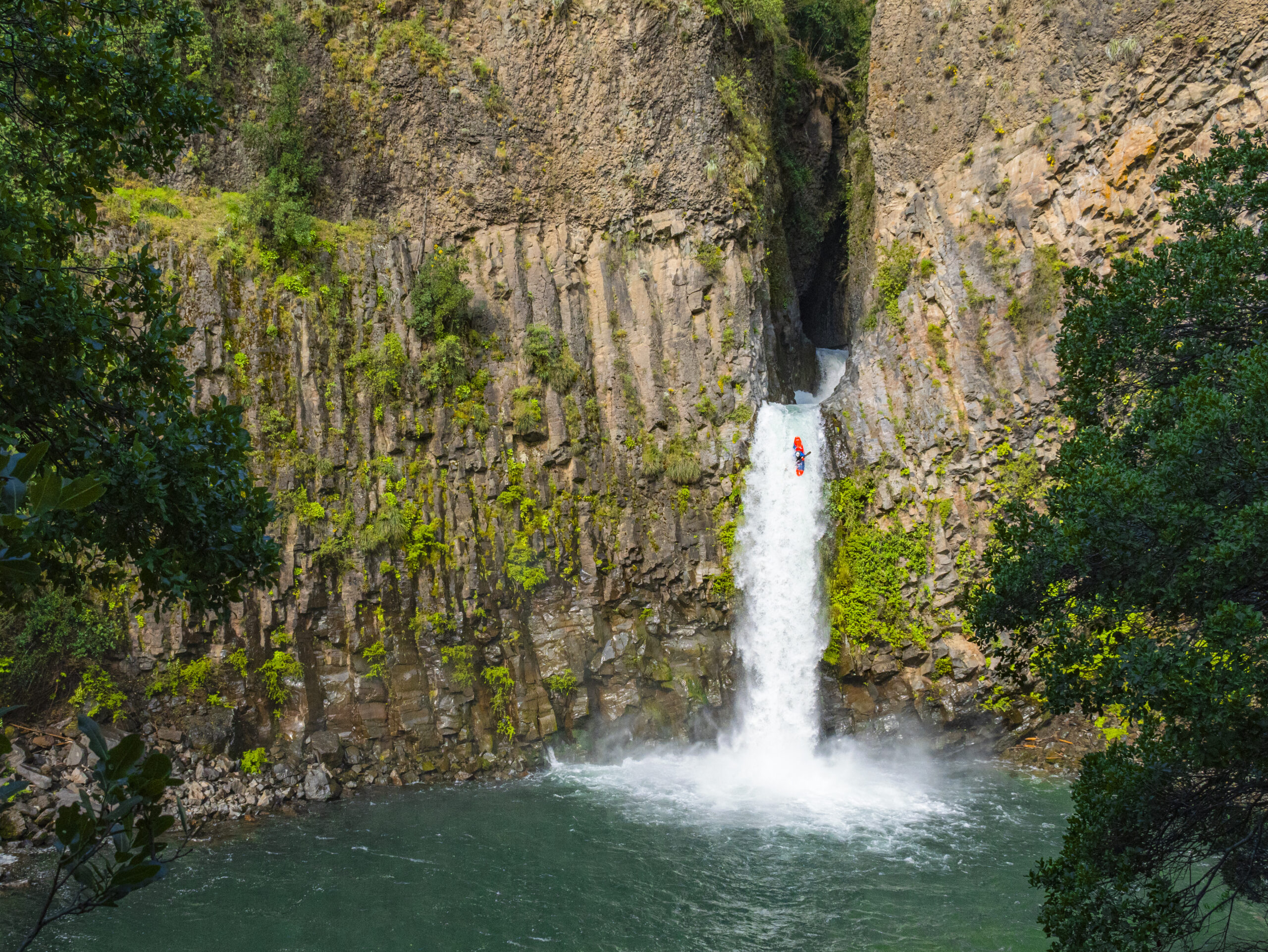
As I peeled out, I got a sense of calm that I was ready for this drop; the water on the lip was pushing in all directions and bouncing off the walls, but the ReactR was stable and free in these tough conditions. As my bow started to drop over the falls, I placed my right blade in as I was going over the falls to keep my balance and just held that position for as long as possible, staring down the bottom of the drop; it was an awesome feeling! On impact, my paddle got ripped from my hand, so I had to retreat to the hand roll, which was pretty tricky in the pool because the water was exploding from everywhere, but after being thrown around a bit, I got my balance and could celebrate my successful descent of the Salza waterfall.
The waters of New Zealand’s Kaituna River, home to world-class whitewater sections and rich cultural heritage, face an imminent threat from a proposed dam. The project, put forward by Taheke 8C, would destroy paddling opportunities on three renowned gorge sections by constructing a weir and diverting nearly all river flow into a 3-kilometre canal system.
At stake are three legendary whitewater sections:
Pari Whakahihi (Awesome Gorge G3)
Pari Tukino (Gnarly Gorge G5)
Pari Kohukohu (Smokey Gorge G3-4)
These sections will be dried, drowned, or subject to highly varied flows! Upper Awesome Gorge is also a training ground for New Zealand’s world-class slalom athletes, and many international slalom paddlers visit NZ to train here. If the dam is put in place, this training ground will be lost, and the likelihood of recreational releases or access of any form to the lower gorges is very low!
This situation is particularly urgent because of New Zealand’s recently passed Fast-track legislation, which limits public input and environmental impact considerations in the resource consent process. Whitewater NZ, a volunteer-run charity organization, is leading the charge to protect this treasured waterway.
The proposed hydro scheme threatens not just world-class paddling opportunities, but also the river’s ecological health and cultural significance to local communities. If successful, this development could set a concerning precedent for fast-tracked hydro projects on New Zealand’s untouched rivers.
Whitewater NZ is mounting a comprehensive defence through:
Legal advocacy to represent the paddling community in the consent process.
International media campaigns to showcase what’s at stake.
Community mobilization efforts gathering support from paddlers, conservationists, and Indigenous communities.
Independent scientific environmental, recreational, and cultural impact assessments.
How You Can Help
The international paddling community plays a crucial role in protecting the Kaituna!
Here’s how you can make a difference:
Become a Member: Whitewater NZ needs to demonstrate significant representation of the paddling community to secure meaningful dialogue with decision-makers. Your international membership, while requiring a small fee, carries significant weight in discussions with government ministers and adds to their voice as a registered nonprofit organization.
Share Your Story: If you’ve paddled the Kaituna’s legendary gorges, consider sharing your experience. Personal stories about the river’s global significance and how similar developments have impacted rivers in your home country can help build a compelling case for preservation. Consider sharing with communications@whitewater.nz
Spread the Word: Share updates about the Kaituna’s situation within your paddling networks and beyond. The more international attention this receives, the stronger the case becomes for preservation. Follow and share content from Whitewater NZ’s social media channels (find them on Facebook and Instagram) to help amplify their message.
Lend Your Expertise: If you have experience in environmental science, hydro-engineering, public relations, or river conservation, your knowledge could be invaluable. International perspectives on successful river defence strategies are particularly welcome.
The paddling community worldwide has an opportunity to stand with our New Zealand friends in protecting this remarkable river. Become a member, follow Whitewater NZ on socials, and stay tuned for updates on how you can support this crucial conservation effort!